
The number five appears in everyday life in ways that often go unnoticed: five fingers on each hand, five commonly recognized senses, and five points on a star. In number 5 symbolism, these familiar patterns have helped people connect the number with freedom, human experience, balance, curiosity, and change.
Unlike numbers associated primarily with order or completion, five often suggests movement and variety. It can represent the desire to explore new possibilities while remaining connected to the physical world. Its meaning depends on context, however, because different cultures, religions, and symbolic traditions have developed their own interpretations.
In modern American culture, five appears in personal tattoos, decorative designs, spiritual practices, popular expressions, and everyday references. Understanding its symbolism means looking beyond numerology to explore the history, cultural associations, and personal experiences that give this ordinary number meaning.
Quick Answer: What Does Number 5 Symbolize?
Number 5 symbolism commonly represents freedom, change, curiosity, adaptability, and the five senses in modern popular interpretations. Historically, it has also been associated with the human body, fivefold patterns in nature, sacred geometry, and important religious practices, including the Five Pillars of Islam.
TL;DR
- Five commonly represents freedom, exploration, adaptability, and personal growth.
- The five fingers and five senses connect it with human experience.
- Ancient cultures used fivefold patterns in mathematics, philosophy, and sacred imagery.
- American culture associates five with milestones, achievement, and familiar expressions.
- Religious traditions give five distinct meanings that depend on their beliefs.
- Modern tattoos and jewelry often turn five into a personal symbol.
1. The Core Meaning of Number 5
Five is often interpreted as a number of movement, possibility, and independence. It sits between four, which is frequently associated with structure and stability, and six, which can represent harmony or responsibility in some symbolic systems.
This position has encouraged some modern numerological interpretations to associate five with a transition from security toward exploration. The number can suggest a willingness to experiment, question established routines, and learn from unfamiliar experiences.
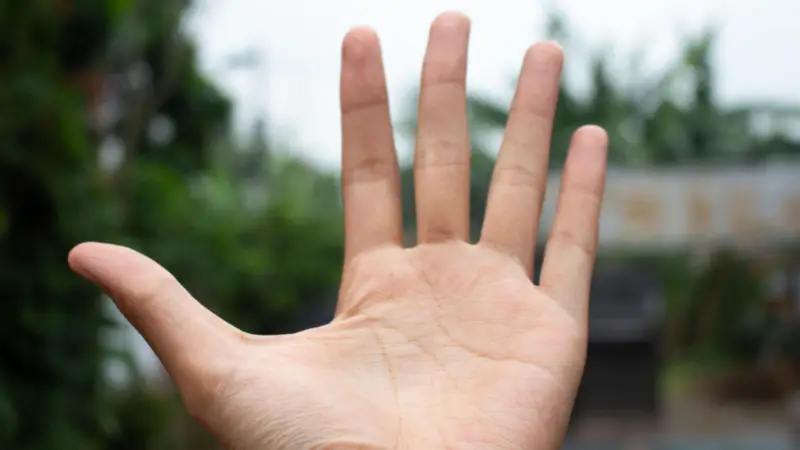
Its association with the human body adds another dimension. Five fingers on each hand allow people to grasp objects, create things, communicate through gestures, and interact with their surroundings. The five commonly recognized senses similarly provide a familiar framework for experiencing the physical world.
These associations do not establish a universal meaning. Rather, they help explain why five has become a useful symbol for human activity, flexibility, and discovery.
2. Historical Origins of Fivefold Symbolism
The symbolic importance of five developed across multiple societies rather than originating from a single source.
In ancient Mesopotamia, five-pointed star shapes appeared in early visual traditions. Their meanings varied according to period and context, so it would be inaccurate to assign every ancient five-pointed star the same religious or magical significance.
Ancient Greek thinkers also explored the mathematical properties of five. The pentagram, a five-pointed star drawn using connected lines, became associated with mathematical relationships and philosophical ideas among certain groups, including the Pythagoreans.
Fivefold classifications also appeared in different philosophical and natural systems. Such groupings offered ways to organize observations about the body, nature, and the structure of the world.
Over time, religious communities, artists, philosophers, and practitioners of esoteric traditions gave five additional meanings. Some interpretations emphasized harmony and protection; others focused on the body, spiritual discipline, or the relationship between the physical and spiritual worlds.
The important distinction is that these meanings developed independently in many settings. Modern interpretations combine some of these historical associations, but they should not be mistaken for one continuous, universal tradition.
3. What Five Means in American Culture
In the United States, five often communicates something familiar, practical, or easy to remember. Its cultural meaning comes less from a single national belief and more from everyday language, education, entertainment, and personal experience.
Consider the expression “five-star.” Hotels, restaurants, and other services use star ratings to communicate quality or prestige, although rating systems differ by industry. In this setting, five generally signals the highest rating available within a five-star scale.
Five also appears in the expression “high five,” a gesture of celebration, encouragement, or shared achievement. The gesture can mark a successful play, a completed project, or a small personal victory.
In education and work, the number can represent a group, a short checklist, or a memorable set of steps. People frequently organize information into groups of five because the structure is convenient, not necessarily because the number has a hidden meaning.
American popular culture therefore gives five a flexible identity. Depending on the situation, it can suggest excellence, teamwork, simplicity, or a memorable milestone.
4. Number 5 and Freedom
Freedom is one of the most common associations in contemporary numerological interpretations of five.
The connection comes from the number’s symbolic relationship with movement and variety. Five can represent the desire to make independent choices, discover new environments, and resist routines that feel restrictive.
Someone who associates five with freedom might use it to mark a move to a new city, a career change, or the beginning of a more independent chapter in life.
For example, a person beginning a solo travel journey might choose a small number-five pendant as a reminder to remain open to unfamiliar experiences. The meaning comes from the intention attached to the object rather than from any inherent property of the number.
Freedom does not always mean rejecting commitment. It can also mean having enough confidence to make thoughtful choices while accepting responsibility for their consequences.
5. Five as a Symbol of Change and Adaptability
Five is frequently interpreted as a sign of transition. In numerology, it is associated with changing circumstances, experimentation, and the ability to adjust when plans do not unfold as expected.
This interpretation makes the number relevant during periods of personal development. A new job, a relationship transition, a move, or a change in priorities can encourage someone to think about what they are ready to leave behind and what they want to explore next.
The symbolism is particularly useful when change feels uncertain. Five can serve as a personal reminder that adaptation is a skill rather than a failure to maintain stability.
However, the number does not predict that a major change is coming. Seeing five repeatedly is not evidence that the future contains a particular event. Its value is reflective: it can prompt a person to consider whether their habits, priorities, or circumstances need attention.
6. The Five Senses and Human Experience
Sight, hearing, smell, taste, and touch are commonly taught as the five traditional senses. Human sensory perception is more complex than this introductory classification, but the grouping remains familiar in education and popular culture.
Symbolically, the five senses connect the number with awareness, perception, and engagement with the surrounding world.
A person might use five as a reminder to pay attention to ordinary experiences: the taste of a favorite meal, the sound of rain, the texture of a handmade object, or the colors of a landscape.
This interpretation also helps explain why five can be associated with being grounded in the present moment. It directs attention toward what people can observe and experience rather than toward abstract predictions.
In art and design, fivefold patterns can similarly suggest a relationship between the human body and the natural environment.
7. The Five-Pointed Star and Its Symbolism
The five-pointed star, also known as a pentagram when represented by its geometric form, is one of the most recognizable visual expressions of five.
Its meaning depends on its cultural and historical setting. Five-pointed stars have appeared in decorative art, religious imagery, political emblems, military insignia, and contemporary spiritual practices.
In modern American public life, the star frequently represents achievement, recognition, patriotism, or excellence. Stars appear on flags, medals, uniforms, award graphics, and entertainment memorabilia.
In some spiritual traditions, the pentagram represents relationships among elements of the natural world, the human body, or spiritual principles. Certain practitioners use it as a protective or ritual symbol.
The design should not automatically be interpreted as occult or religious. A five-pointed star on a flag, school emblem, or award may have an entirely different purpose.
Its shape supplies a visual connection to five, but context determines what the image communicates.
8. Number 5 in Religion and Spiritual Traditions
Five has important associations in several religious traditions, although its meaning differs significantly between them.
Islam
In Islam, five is closely connected with the Five Pillars: the declaration of faith, daily prayer, obligatory almsgiving, fasting during Ramadan, and pilgrimage to Mecca for those who are able. Muslims also perform five prescribed daily prayers.
These practices give five a concrete religious significance rooted in worship, duty, generosity, and spiritual discipline. It is not simply a generalized symbol of freedom or personal change.
Christianity
Christian symbolism sometimes associates five with the five wounds of Jesus Christ during the crucifixion. Medieval Christian interpretations also connected the five-pointed star with the human form and spiritual ideas about the relationship between humanity and God.
These associations belong to particular historical and theological contexts rather than representing a single meaning shared by all Christian communities.
Other spiritual traditions
Fivefold symbolism also appears in different philosophical and spiritual systems. Some traditions organize the world through five elements or comparable categories, although the elements themselves differ across cultures.
In contemporary Western esoteric practices, five may be associated with the five points of a pentagram and concepts such as earth, air, fire, water, and spirit.
These interpretations should be understood within their respective traditions. The presence of five in multiple religions does not mean those religions share the same beliefs about the number.
9. Five in Chinese Philosophy and Traditional Cosmology
In Chinese philosophical traditions, five is especially important in the framework known as wuxing, commonly translated as the Five Phases or Five Elements.
The five phases are wood, fire, earth, metal, and water. They form a system for describing relationships, cycles, and transformations in the natural world and human affairs.
Unlike a simple list of five physical substances, wuxing describes dynamic relationships. The phases are used in traditional Chinese thought to explain patterns of generation and control, among other processes.
This framework influenced areas of Chinese philosophy and traditional practices, including certain approaches to medicine, cosmology, and the interpretation of seasonal relationships.
The symbolism differs from Western numerology. Rather than focusing primarily on individual freedom or personality, fivefold classification in this context helps organize relationships and transformations.
It is important to distinguish these historical philosophical frameworks from modern scientific explanations. Their cultural significance is substantial, but their traditional claims should not automatically be treated as scientifically established facts.
10. The Emotional and Psychological Meaning of Five
Numbers can acquire emotional significance through repetition, memory, and personal associations. Five is particularly easy to remember because it appears in the body, language, and common visual patterns.
For one person, five might represent a family milestone. For another, it might recall a sports achievement, a graduation year, or a meaningful anniversary.
Its associations with exploration and change may also make it appealing to people who are reconsidering their routines or identity. Choosing five as a personal symbol can provide a concise way to express a desire for flexibility or a fresh perspective.
Psychologically, this does not mean the number itself causes a particular emotion or personality trait. People often assign significance to familiar patterns because those patterns help them organize memories and intentions.
The distinction matters: a symbol can have genuine personal meaning without possessing a scientifically demonstrated ability to influence events.
11. Number 5 in Numerology
In numerology, five is commonly linked with curiosity, independence, versatility, adventure, and a preference for variety.
Some numerological systems interpret a person’s birth date or other number patterns to develop descriptions of character and life themes. Within these systems, five is often presented as an adaptable number associated with learning through experience.
A numerological interpretation might describe a person influenced by five as someone who enjoys travel, experimentation, social interaction, or changing environments.
These descriptions are spiritual or interpretive beliefs, not scientifically validated personality assessments. They should not be used as a substitute for evidence-based psychological evaluation or as a reliable way to predict someone’s future.
For readers interested in numerology, the most constructive approach is to use the interpretation as a prompt for self-reflection. For example, the association with variety might encourage someone to ask whether they need new challenges or whether they have taken on too many competing interests.
12. How Number 5 Appears in Modern Tattoos, Jewelry, and Design
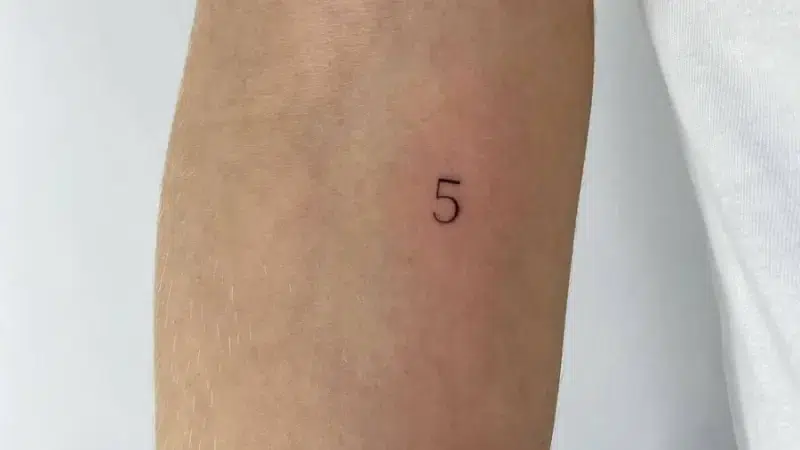
Five can be incorporated into personal style without requiring a universally recognized symbolic meaning.
- Tattoos: A person might choose the numeral five to commemorate a fifth anniversary, honor a meaningful date, or represent a personal philosophy.
- Jewelry: A pendant featuring five or a five-pointed star can serve as a reminder of an important experience, belief, or goal.
- Home decor: Five-pointed stars and groups of five decorative objects can create visual rhythm or connect a design with a personal theme.
- Fashion: Repeated five-pointed motifs may communicate a sporty, celestial, geometric, or spiritual aesthetic.
- Digital profiles: People may use five in usernames, graphics, or personal branding because it is memorable or connected to an important date.
Before choosing a design, it helps to decide whether the intended meaning is personal, cultural, religious, or simply aesthetic. A plain numeral and a pentagram may look related, but they do not necessarily communicate the same thing.
13. Positive and Negative Associations of Number 5
Five is often interpreted positively, but symbolic systems sometimes emphasize its less favorable qualities as well.
| Context | Positive association | Potential negative association |
|---|---|---|
| Numerology | Curiosity and adaptability | Restlessness or inconsistency |
| Personal growth | Exploration and independence | Avoidance of commitment |
| Human experience | Sensory awareness and engagement | Distraction or overindulgence |
| Spiritual traditions | Harmony within a symbolic framework | Meanings that vary by belief system |
| Popular culture | Achievement and recognition | Excessive focus on ratings or status |
The negative associations in this table largely come from modern interpretive systems, not from an objective property of the number.
For example, flexibility can be helpful when circumstances change, but continually abandoning plans may make it difficult to achieve long-term goals. The same quality can be interpreted differently depending on how it appears in a person’s life.
Five is therefore neither inherently fortunate nor inherently unlucky. Its meaning depends on the framework in which it is used.
14. Common Misunderstandings About Number 5
Several misconceptions can make the symbolism of five seem more universal or certain than it really is.
Every appearance of five is not a sign. Seeing the number on a clock, receipt, or license plate does not establish that the universe is sending a message. People naturally notice familiar patterns, especially when they are already thinking about them.
The five-pointed star does not have one fixed meaning. Its interpretation depends on whether it appears in a national emblem, religious setting, decorative design, or contemporary spiritual practice.
Numerology is not the same as psychology. Descriptions of five as adventurous or independent belong to a symbolic tradition, not to a validated method of determining personality.
Different cultures do not share one universal interpretation. Five has specific roles in Islamic practice, Chinese philosophy, Western esoteric traditions, and modern American culture. Those meanings should be explained on their own terms.
Understanding these distinctions makes the symbolism more useful. Rather than searching for a single answer that applies everywhere, readers can ask who uses the symbol, in what setting, and for what purpose.
15. How the Meaning of Five Has Evolved
The meaning of five has changed as people have developed new ways to organize knowledge, express beliefs, and communicate identity.
In ancient mathematical and philosophical settings, five could be understood through geometric relationships and classifications of the natural world. Religious communities later connected it with particular practices, teachings, and visual forms.
In medieval Europe, the pentagram gained additional roles in Christian interpretation and ceremonial traditions. In modern times, five-pointed stars became prominent in public symbols, military insignia, awards, popular graphics, and decorative design.
Contemporary numerology added another widely circulated interpretation, emphasizing independence, movement, and personal transformation. Social media and online spiritual communities have helped spread these associations, often presenting them in simplified forms.
The result is a collection of meanings rather than a single, unchanging definition. Five can signify religious responsibility in one context, a personal milestone in another, and simply a convenient numerical grouping in everyday life.
That flexibility is central to understanding its continuing appeal.
FAQs
1. Is the number 5 a symbol of good luck?
Five is considered fortunate in some cultural and personal belief systems, but it is not universally regarded as a lucky number. Whether it represents good fortune depends on the cultural tradition, individual experience, and context in which it appears.
2. What does number 5 mean spiritually?
In contemporary spiritual interpretations, five often represents freedom, adaptability, exploration, and personal growth. In established religious traditions, its meaning may instead be connected to specific doctrines, practices, or sacred classifications.
3. What does a number 5 tattoo symbolize?
A number-five tattoo can commemorate a meaningful date, a fifth family member or milestone, or a personal association with change and independence. Its meaning is usually determined by the person wearing it rather than by a universal tattoo convention.
4. Why is the number 5 important in Islam?
Five is central to Islamic practice because of the Five Pillars of Islam and the five prescribed daily prayers. These are expressions of religious duty and devotion, not merely symbolic references to a number.
5. What does the number 5 mean in numerology?
Numerology commonly associates five with freedom, versatility, curiosity, and a desire for new experiences. These interpretations are part of a belief system and should not be treated as scientifically established predictions about personality or future events.
6. Is the number 5 positive or negative?
Five is generally interpreted positively in many modern numerological settings, but some interpretations associate it with restlessness, impulsiveness, or difficulty maintaining commitments. Neither positive nor negative meaning is inherent in the number itself.
7. What does a five-pointed star represent?
A five-pointed star can represent achievement, national identity, religious ideas, or spiritual concepts, depending on its setting. Its shape alone is not enough to establish a particular meaning.
Conclusion
Number 5 symbolism brings together several recognizable themes: freedom, adaptability, human experience, and the possibility of change. Its historical associations range from ancient geometry and philosophical classifications to religious practices and modern visual culture.
In the United States, five can communicate achievement, teamwork, personal milestones, or an interest in exploration. In other traditions, it carries more specific meanings that deserve to be understood within their cultural and religious contexts.
Ultimately, the number five does not need a single universal definition to be meaningful. Its symbolism becomes most useful when people understand where an interpretation comes from and how they choose to apply it to their own lives. Exploring the historical significance of number symbolism can provide additional context for understanding how cultural and religious traditions shape the meanings people assign to numbers.


