Norse Raven Sym
Animal SymbolismBird SymbolismCelestial SymbolismColor SymbolismFlower & Plant SymbolismLiterary SymbolismNature SymbolismNumber SymbolismObject SymbolismSigns & OmensSpiritual & Religious Symbols
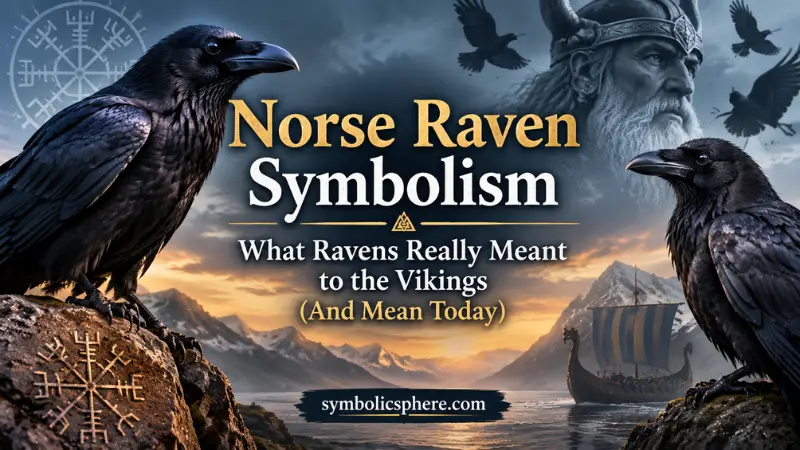
ew animals show up as often in Norse mythology as the raven — and for good reason. Ravens are sharp, observant birds, and Vikings noticed. That real-world intelligence got woven into stories about Odin, battle, and the search for knowledge, giving the raven a symbolic weight that’s lasted well over a thousand years.
Today, that symbolism shows up far from its Scandinavian origins — in tattoos, jewelry, fantasy novels, and video games across the U.S. But the modern version often strips away the original context, leaving just a general sense of “wisdom” or “mystery.” This guide breaks down what Norse raven symbolism actually meant historically, where it came from, and how (and why) its meaning has shifted for a modern American audience.
Quick Answer
In Norse mythology, the raven symbolizes wisdom, thought, and memory, most famously through Odin’s two ravens, Huginn and Muninn, who flew across the world each day to bring him news. Vikings also associated ravens with battle awareness and strategy. Today, Americans mostly connect raven symbolism with intelligence, independence, and Viking heritage — through tattoos, jewelry, and fantasy media.
Key Takeaways
- Ravens symbolize wisdom, knowledge, and observation in Norse tradition.
- Odin’s ravens, Huginn and Muninn, represent thought and memory.
- Vikings linked ravens to battlefield awareness and strategic thinking, not worship.
- Modern raven symbolism in the U.S. leans toward intelligence, individuality, and heritage.
- The symbol carries both light (wisdom) and dark (mortality) associations, depending on context.
What Do Ravens Symbolize in Norse Mythology?
The raven’s reputation in Norse mythology rests on two things: the bird’s real-world intelligence and its role in the stories of Odin, the chief god associated with wisdom, war, and poetry.
Odin was said to keep two ravens, Huginn and Muninn — Old Norse for “thought” and “memory.” Each day, the pair flew out across the world and returned to whisper back what they’d seen and heard. That role made ravens a symbol of observation and awareness: the idea that knowledge, not just physical strength, was a source of power.
This is worth underscoring because it’s often missed — the raven in Norse belief wasn’t primarily a symbol of death. Its tie to Odin gave it a more layered meaning centered on intelligence, memory, and the pursuit of understanding.
The Historical Roots: Ravens in Viking-Age Scandinavia
Ravens appear consistently in Scandinavian archaeology, artwork, and written sources from before and during the Viking Age, often alongside symbols of power and warfare.
Vikings were close observers of animal behavior, and ravens gave them plenty to notice. The birds can locate food from long distances and were known to gather near battlefields — a practical fact of nature that fed directly into their symbolic meaning. Their presence around conflict connected them to warfare, but their intelligence is what elevated that association into something more specific: strategy and foresight rather than simple destruction.
Some Viking groups carried raven imagery on banners to represent leadership and victory. It’s a common misconception that this amounted to raven worship — historically, there’s little evidence Vikings worshipped ravens as gods in their own right. They were respected as symbols connected to Odin and to the practical business of survival and battle readiness, not treated as deities.
For more on Odin’s role in Norse religion, Britannica’s overview of Odin is a solid starting point. Archaeological context on the period comes from institutions like The National Museum of Denmark.
Odin’s Ravens: Huginn and Muninn Explained
| Context | Common Meaning Today | Key Associations | Notes |
|---|---|---|---|
| Odin’s ravens (Huginn & Muninn) | Wisdom and awareness | Knowledge, memory, insight | Rooted directly in mythology |
| Viking warriors | Strategy and observation | Courage, battle planning | Tied to warfare and survival |
| Modern tattoos | Personal identity | Intelligence, independence | Meaning shifts with design |
| Fantasy media | Mystery and power | Magic, storytelling | Loosely inspired by mythology |
The core idea behind Huginn and Muninn is simple but enduring: information is strength. Rather than relying only on force, Odin depended on what his ravens brought back from the wider world — a theme that still shapes how the symbol gets used in modern storytelling and design.
How Americans Interpret Norse Ravens Today
In the U.S., raven symbolism today is usually filtered through a mix of mythology, nature symbolism, and pop culture rather than Norse religious belief itself. Most people associate the bird with wisdom, independence, and curiosity.
Two groups tend to gravitate toward the symbol:
- People exploring Scandinavian heritage, who use raven imagery to connect with Viking history or ancestry.
- People drawn simply to the bird’s real-world traits — intelligence and adaptability — independent of any mythological framework.
It’s common for someone to wear a raven necklace or display raven art purely for what it represents (knowledge, resilience) without any connection to Norse belief. That’s a meaningful distinction from the historical context, and worth keeping in mind when reading modern interpretations as separate from the original mythology.
Positive and Darker Meanings of the Raven
Common positive associations:
- Intelligence
- Curiosity
- Adaptability
- Memory
- Observation
- Independence
- Strategic thinking
Darker associations: Ravens also carry heavier meanings, largely because of their historical link to battlefields. As scavengers that appeared after conflict, they became associated with endings and mortality in some traditions. But darkness in this context doesn’t necessarily mean negativity — many cultures treat symbols connected to death as reminders of transformation and the natural cycle of life, rather than as omens of evil. The raven’s darker side is better understood as awareness of hard realities than as a symbol of malevolence.
Raven Symbolism Beyond Norse Culture
Norse mythology made the raven famous in Western contexts, but it’s far from the only tradition to feature the bird prominently. In several Indigenous cultures of North America, ravens (and related corvids) appear in creation stories as figures tied to transformation and intelligence — meanings that developed independently of Norse belief and shouldn’t be conflated with it.
The recurring thread across cultures isn’t coincidence: people repeatedly recognize the same traits in ravens — intelligence, adaptability, and a strong presence in the natural world — and build symbolism around them accordingly.
Why Raven Tattoos Are So Popular
Raven tattoos are common among people drawn to mythology, nature, or personal symbolism, and the specific meaning usually depends on the design:
- Raven + runes — emphasizes Norse or Viking heritage
- Raven + flowers — balances darker themes with renewal
- Solo raven — often represents intelligence, independence, or personal transformation
Beyond tattoos, raven imagery in jewelry and clothing lets people express identity through a symbol with real historical depth, without necessarily signaling any specific belief system.
Ravens in Modern Media
Films, TV shows, video games, and fantasy novels frequently use ravens to signal magic, intelligence, or a connection to ancient worlds — usually drawing loosely from Odin’s ravens but adapting the imagery for modern storytelling. This exposure is a big part of why many Americans recognize ravens as part of Viking-inspired visual language even without knowing the original myths.
Common Misconceptions About Norse Ravens
“Ravens only represented death.” Not accurate. While ravens carried associations with war, their tie to Odin points to a broader meaning centered on wisdom and awareness — reducing the symbol to darkness overlooks most of its original meaning.
“Every raven image has religious significance.” Also not accurate. Most contemporary raven imagery is chosen for artistic or personal reasons — heritage, aesthetics, or admiration for the animal — rather than as a religious statement.
FAQs
What does a raven symbolize in Norse mythology?
Wisdom, thought, memory, and observation — most directly through Odin’s ravens, Huginn and Muninn, who gathered information for him.
Are ravens considered good or bad symbols?
Both. They represent intelligence and knowledge, but their association with battle and death has also given them more serious, weightier interpretations.
What does a raven tattoo mean?
It depends on the design, but common meanings include wisdom, independence, mythology, personal transformation, and an interest in Viking culture.
Did Vikings worship ravens?
No. Vikings respected ravens as symbols connected to Odin, warfare, and the natural world, but there’s no strong evidence they worshipped them as gods.
Why are ravens associated with Odin?
Because of Huginn and Muninn, the two ravens said to fly across the world daily and return with information — representing thought, memory, and awareness.
Is Norse raven symbolism still used today?
Yes — commonly in tattoos, jewelry, fantasy media, and Scandinavian-inspired design, usually to represent intelligence and individuality.
Does the raven always represent darkness?
No. Despite ties to death and battle, Norse raven symbolism leans heavily toward learning, strategy, and wisdom. Meaning depends on context.
Conclusion
The raven remains one of the most recognizable symbols in Norse mythology because it holds multiple meanings at once — intelligence, memory, and awareness alongside battle and mortality. In modern American culture, it’s most often chosen as a symbol of curiosity, independence, and connection to Viking heritage. Its staying power comes from that same duality: a reminder that knowledge, more than force, shapes how people navigate the world.