Introduction
Building wealth in America is often associated with high-paying careers, successful businesses, expensive investments, and large bank accounts. Many people believe that becoming financially successful requires earning a six-figure salary or receiving a substantial inheritance. However, building wealth is not limited to people with exceptionally high incomes. Ordinary workers can also improve their financial position through consistent saving, responsible spending, smart investing, and long-term planning.
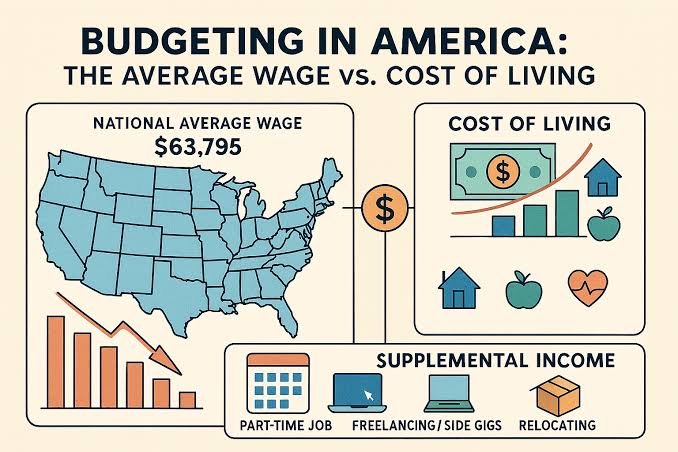
An average salary may not provide unlimited financial flexibility, especially when housing, healthcare, transportation, groceries, childcare, and other living expenses continue to rise. Many American households must carefully manage their monthly income just to cover essential bills. Despite these challenges, it is possible to build financial security without earning an extraordinary amount of money.
The key is understanding that wealth is created through the difference between what you earn, what you spend, and what you keep and invest over time. Someone who earns a moderate salary and consistently saves a portion of their income may eventually accumulate more wealth than someone who earns considerably more but spends nearly everything.
Building wealth also requires patience. Investments need time to grow, retirement accounts benefit from long-term contributions, and financial habits become more powerful when repeated for years. You do not need to become wealthy overnight. You need a realistic strategy that you can maintain throughout different stages of your life.
This guide explains how Americans earning average salaries can build wealth through budgeting, saving, investing, retirement planning, debt management, career development, and smart financial decisions. It also explores practical strategies for people who are starting with limited savings and want to create a more secure financial future.
Understanding What Building Wealth Really Means
Before creating a wealth-building plan, it is important to understand what wealth actually means. Wealth is not simply the amount of money you earn every month. It is the value of the financial resources and assets you own compared with the money you owe.
One useful measure is net worth. Your net worth is calculated by subtracting your total liabilities from your total assets.
Assets may include cash savings, retirement accounts, investment portfolios, real estate, business ownership, and other valuable property. Liabilities include credit card balances, personal loans, student loans, car loans, mortgages, and other outstanding financial obligations.
For example, imagine someone has $15,000 in savings, $35,000 in retirement investments, and a vehicle worth $10,000. Their total assets are $60,000. If they also owe $12,000 on a car loan and $8,000 in credit card debt, their net worth is $40,000.
This calculation provides a more complete picture of financial progress than salary alone.
A person earning $55,000 annually with manageable expenses and growing investments may have a stronger financial position than someone earning $100,000 while carrying large debts and having little savings.
The goal of building wealth is to increase your net worth over time. This usually involves saving money, investing regularly, reducing expensive debt, and acquiring assets that may grow in value or generate income.
Why an Average Salary Can Still Build Wealth
Many people underestimate the financial opportunities available to ordinary earners. They may assume that investing is only for wealthy households or that saving a small amount each month will not make a meaningful difference.
In reality, regular contributions can become significant when maintained over a long period. The combination of consistent saving and compound growth can help people build substantial financial resources.
Consider someone who invests $200 every month. The total amount contributed over ten years would be $24,000 before investment growth. Over twenty years, contributions would reach $48,000, and over thirty years they would total $72,000.
If investments earn positive returns, the final account value may be considerably higher because investment growth can compound over time. However, returns are never guaranteed, and market investments can lose value.
An average salary can support wealth building when expenses are controlled and savings are treated as a priority. The objective is not to save every dollar or avoid enjoying life. It is to create a balance between current needs and future financial security.
People with moderate incomes can also benefit from employer retirement contributions, tax-advantaged accounts, professional development, and affordable investment products.
The most important factor is consistency. Starting with a small amount and increasing contributions as income grows can be more effective than waiting until you earn a much larger salary.
Create a Realistic Monthly Budget
A budget is the foundation of almost every successful wealth-building strategy. It helps you understand where your money goes and identify how much can be directed toward savings and investments.
Start by calculating your monthly take-home income. This is the amount you receive after taxes, insurance deductions, and other payroll deductions. Include reliable additional income from freelance work, part-time employment, or other sources.
Next, list your monthly expenses. Divide them into essential and nonessential categories.
Essential expenses may include rent or mortgage payments, utilities, groceries, transportation, healthcare, insurance, childcare, and minimum debt payments. Nonessential expenses may include restaurant meals, entertainment, shopping, subscriptions, and vacations.
Review bank statements and credit card transactions from the previous few months. This helps identify spending patterns that may be difficult to notice during everyday life.
Once you understand your expenses, decide how much money you can save every month. Even if the amount is initially small, making saving a regular part of your budget is an important step.
A budget should be realistic. If you create an extremely restrictive plan that leaves no room for occasional enjoyment, you may find it difficult to follow. Instead, choose spending limits that allow you to meet your financial goals while maintaining a reasonable lifestyle.
Review your budget monthly and adjust it when your income or expenses change.
Use the 50/30/20 Budgeting Rule
The 50/30/20 budgeting rule is a simple method that can help Americans organize their income.
Under this approach, approximately 50 percent of take-home income is allocated to needs, 30 percent to wants, and 20 percent to savings and debt repayment.
For example, if your monthly take-home income is $4,000, the suggested allocation would be:
- $2,000 for essential needs.
- $1,200 for personal wants.
- $800 for savings and debt repayment.
These percentages are guidelines rather than strict requirements. People living in expensive cities may need to spend more than 50 percent of their income on housing and other essential costs.
Someone with significant high-interest debt may also choose to direct more than 20 percent toward repayment and savings.
The advantage of this method is its simplicity. It encourages people to separate essential spending from lifestyle expenses and long-term financial goals.
If the traditional percentages do not match your circumstances, adjust them. A 60/20/20 or 70/15/15 arrangement may be more realistic for some households.
The most important principle is ensuring that a portion of your income is consistently directed toward improving your financial position.
Pay Yourself First Every Month
One of the most effective wealth-building habits is paying yourself first. This means moving money into savings and investments before spending the remaining income on nonessential purchases.
Many people follow the opposite approach. They receive their salary, pay bills, spend money throughout the month, and save whatever remains. Unfortunately, there may be little or nothing left by the end of the month.
Paying yourself first changes this pattern. Instead of waiting to see what remains, you decide in advance how much money will support your future financial goals.
You can automate transfers from your checking account into a savings account shortly after payday. You can also arrange automatic retirement contributions through your employer.
Start with an amount that is manageable. If you can save $100 per month, begin there. When your income increases or you reduce expenses, increase the contribution.
Automation makes saving easier because it reduces the number of decisions you need to make. It also helps prevent unnecessary spending of money that should be reserved for future goals.
Over time, paying yourself first can become a routine rather than a difficult financial decision.
For More Information About Article, Click Here.
For More UseFul Articles, Click Here.