Introduction
Planning for college expenses is one of the most important financial responsibilities many American families face. The cost of higher education in the United States can be substantial, and tuition is only one part of the total expense. Students may also need money for accommodation, meals, textbooks, transportation, technology, supplies, and other education-related costs. For parents and guardians who want to prepare financially for a child’s future, starting to save early can make a meaningful difference.
A 529 college savings plan is one of the most widely used education savings options in the United States. It is a tax-advantaged account designed to help families save and invest money for qualified education expenses. Contributions are made with after-tax money, but investment earnings can grow tax-free, and withdrawals are generally free from federal income tax when used for eligible expenses under applicable rules.
One major advantage of a 529 plan is that parents do not necessarily need to save the entire cost of college before a child begins studying. They can contribute gradually over many years, allowing their investments more time to grow. Grandparents, relatives, and other people may also contribute to a beneficiary’s account, making it possible for family members to work together toward education goals.
A 529 plan can be useful for more than traditional four-year universities. Depending on current federal and state rules, eligible expenses may include certain community colleges, vocational schools, trade schools, graduate programs, and other qualified educational institutions. Recent federal law changes have also created additional flexibility in certain circumstances, including limited opportunities to transfer unused 529 funds to a Roth IRA for the beneficiary when specific requirements are satisfied.
However, starting a 529 plan requires careful consideration. Plans differ by state, investment options, fees, tax benefits, contribution rules, and available features. A plan that works well for one family may not be the best choice for another.
This guide explains how to start a 529 college savings plan in the USA. It covers how these accounts work, their benefits and disadvantages, how to compare state plans, how much to contribute, which investment options to consider, how withdrawals work, and how to avoid common mistakes. It also explains important tax rules and practical strategies that can help families prepare for future education costs.
What Is a 529 College Savings Plan?
A 529 plan is a tax-advantaged education savings program sponsored by a state, state agency, or eligible educational institution. Its main purpose is to help individuals and families save money for qualified education expenses.
The name comes from Section 529 of the Internal Revenue Code, which establishes the federal tax treatment for these accounts. Although states sponsor most plans, people generally do not have to live in a particular state to open or use its 529 plan. Some states, however, provide tax deductions or credits only when residents invest in their home-state plan.
A typical 529 college savings plan allows an account owner to contribute money and select investments from a menu offered by the plan. The account is associated with a beneficiary, who is usually the student expected to use the funds.
For example, a parent may open a 529 account for a young child and contribute $100 every month. The money can be invested in an age-based portfolio or other available investment options. Over time, contributions and investment earnings may grow, although investment returns are not guaranteed.
When the beneficiary begins eligible education, the account owner can request withdrawals to pay qualified expenses. If the money is used for qualifying purposes, the earnings portion of the withdrawal is generally exempt from federal income tax.
A 529 account is not the same as a regular savings account. Its investments may increase or decrease in value, depending on the selected portfolio and market conditions. Families should understand investment risks and plan fees before contributing.
How Does a 529 Plan Work?
A 529 plan has three main participants: the account owner, the beneficiary, and the investment manager or plan administrator.
The account owner opens the account, makes investment decisions within the available choices, and generally controls withdrawals and beneficiary changes. In many family situations, a parent or grandparent serves as the account owner.
The beneficiary is the person whose qualified education expenses the account is intended to support. A child is a common beneficiary, but an adult can also open an account for their own education.
The plan administrator manages the account according to the plan’s rules. Depending on the state, investments may be managed by financial institutions or investment companies working with the state-sponsored program.
Contributions are added to the account using after-tax money. The account owner then chooses how the money should be invested. Some plans offer age-based portfolios that automatically adjust their investment mix as the beneficiary gets closer to college age.
Other plans offer static portfolios, individual mutual funds, index-based options, or fixed-income investments. The available choices vary by plan.
As the account grows, investment earnings are generally not taxed annually at the federal level. When funds are withdrawn for qualified expenses, the earnings are generally exempt from federal income tax.
If money is withdrawn for a nonqualified purpose, the earnings portion is generally subject to ordinary income tax and a 10% federal additional tax, although exceptions may apply. State tax consequences can also apply.
Main Types of 529 Plans
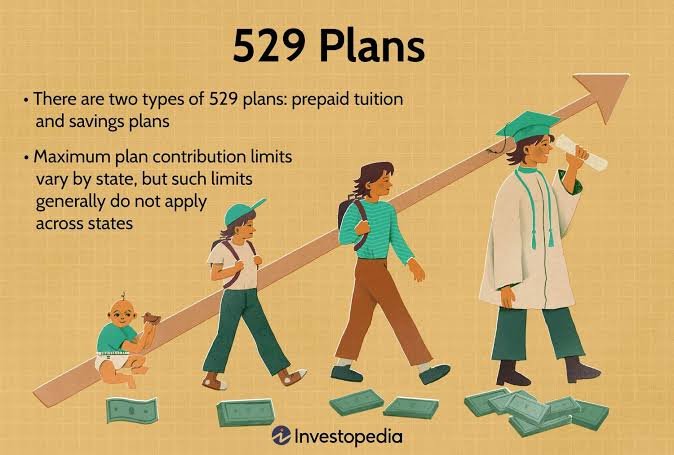
There are two major categories of 529 plans: college savings plans and prepaid tuition plans. Understanding their differences can help families choose the right structure.
529 College Savings Plans
A 529 college savings plan allows families to invest money for future qualified education expenses. The account’s value changes according to contributions, investment performance, fees, and withdrawals.
The account owner generally chooses from investment portfolios offered by the plan. These may include age-based options, stock and bond funds, and other investment choices.
The main advantage is flexibility. Funds can generally be used at eligible educational institutions across the United States and, in some circumstances, at eligible institutions abroad. Qualified expenses may include tuition, fees, books, computers, and certain room-and-board costs, subject to applicable requirements.
The main risk is investment uncertainty. If markets decline shortly before the student needs the money, the account could be worth less than expected.
College savings plans are widely available and are often the first type families consider when opening a 529 account.
Prepaid Tuition Plans
A prepaid tuition plan allows participants to purchase tuition credits or units at eligible institutions or according to a state-defined system. The goal is to protect against some future increases in tuition costs.
Prepaid plans differ significantly. Some are designed around public colleges in a particular state, while others offer different arrangements. Their coverage, eligible institutions, residency requirements, and guarantees vary.
These plans may be attractive to families who want more predictable tuition planning. However, they may offer less flexibility than traditional college savings plans.
A prepaid tuition plan may not cover room and board, textbooks, transportation, or other costs. Families should carefully examine what the plan actually promises.
Benefits of Starting a 529 Plan Early
Starting a 529 plan early can give savings more time to grow. The longer the investment period, the more opportunity there may be for contributions and investment earnings to accumulate.
One of the biggest advantages is tax-free growth for qualified use. Unlike a regular taxable investment account, a 529 account generally does not require federal income tax payments each year on investment earnings.
Another benefit is flexibility in beneficiary selection. If the original beneficiary does not need the money, the account owner may be able to change the beneficiary to another eligible family member without federal income tax or penalty, subject to applicable rules.
A 529 plan can also make family education planning easier. Parents can establish automatic monthly contributions, grandparents can contribute gifts, and other relatives can support the beneficiary’s education goals.
Many plans have relatively simple online account management. Account owners can monitor balances, change investment options according to plan rules, update beneficiaries, and request distributions.
In addition, many states provide tax deductions or credits for contributions to certain 529 plans. These state-level benefits vary, so residents should review their local rules before selecting a plan.
Step 1: Decide Why You Want to Open a 529 Plan
Before opening an account, identify the education expenses you want to support. A clear goal can help determine how much to save and which investment strategy may be appropriate.
Some families want to prepare for four years of undergraduate education at a public university. Others want to help cover community college, vocational training, graduate school, or private college expenses.
You do not necessarily need to save the full expected cost. A family may decide to cover a percentage of tuition and fees while expecting the student, parents, scholarships, grants, or other resources to cover the remaining amount.
Consider the beneficiary’s age and likely education timeline. A newborn has many years before college, while a teenager may need the money relatively soon.
The time available for investing is important because it affects how much investment risk may be appropriate. A longer time horizon may allow more exposure to growth-oriented investments, while a shorter horizon may call for a more conservative approach.
Write down your primary goal, estimated timeline, and affordable monthly contribution before comparing plans.
Step 2: Compare 529 Plans From Different States
One common misunderstanding is that families must use the 529 plan offered by their state of residence. In many cases, they can compare plans from different states and choose an option that meets their needs.
However, state tax benefits can make a home-state plan more attractive. Some states provide a tax deduction or credit for contributions made to their own plan. Others offer tax benefits for contributions to any state’s plan, while some do not provide a state income-tax deduction at all.
Start by reviewing your state’s 529 tax rules. Determine whether contributions qualify for a deduction or credit, whether there are annual limits, and whether the benefit is restricted to the state-sponsored program.
Next, compare other important features.
Investment Options
Review the portfolios available in each plan. Some provide age-based portfolios, index funds, actively managed funds, and conservative investment options.
The number of choices is not necessarily the most important factor. Focus on whether the available investments suit your goals, timeline, and comfort with market risk.
Fees and Expenses
Fees can reduce the amount of money that remains invested. A plan may charge account maintenance fees, program management fees, underlying fund expenses, or other administrative costs.
Compare the total expense structure rather than looking at only one advertised fee. Some plans waive certain charges when account balances meet specific requirements or when electronic statements are selected.
Account Minimums
Some plans allow very small initial contributions, while others require a larger opening deposit. If you want to begin saving with a limited amount, check the minimum contribution requirements.
Contribution Limits
529 plans have high aggregate contribution limits that vary by state and are generally designed to accommodate substantial education savings. These limits are not annual contribution limits in the same way as some retirement accounts.
Review the specific plan’s aggregate limit and rules concerning contributions. Large contributions may also have gift-tax implications.
Online Access and Customer Service
A convenient website, mobile access, clear statements, and responsive customer support can make managing the account easier.
Check whether the plan offers automatic contributions, recurring investment purchases, electronic gifts, and easy distribution requests.
Plan Ratings and Administration
Research the plan’s investment structure, fees, administration, and disclosures. Independent comparisons may be useful, but remember that rankings and ratings reflect particular methodologies and may not account for every family’s needs.
Step 3: Understand Your State’s Tax Benefits
State tax benefits are an important part of choosing a 529 plan. Some states allow residents to deduct contributions from state taxable income, while others provide a tax credit.
For example, a state may allow residents to deduct eligible contributions up to a specified annual amount. Another state may provide a credit equal to a percentage of contributions, subject to a maximum.
Some states have no state income tax, so residents may not receive a state income-tax deduction. Other states may offer benefits even when residents contribute to an out-of-state plan.
These rules can change. Check current information from your state tax agency and the official 529 plan before making a decision.
Also understand whether the benefit is available only to the account owner or whether other contributors can claim it. Some states have special rules for married couples, grandparents, and joint tax returns.
Do not choose a plan only because it advertises a tax deduction. Compare the value of the tax benefit with the plan’s fees, investment choices, and overall suitability.
Step 4: Decide Who Should Own the Account
The account owner generally controls the 529 account, while the beneficiary is the student whose education expenses can be paid from it.
A parent commonly serves as the account owner. This arrangement gives the parent control over investment choices, withdrawals, and beneficiary changes under the plan’s rules.
A grandparent can also own an account for a grandchild. Other relatives or individuals may be able to open accounts, subject to plan requirements.
Ownership matters because it can affect control of the money, tax reporting, financial aid considerations, and what happens if the owner dies or becomes unable to manage the account.
Families should review the plan’s successor-owner provisions. Naming a successor owner can help provide continuity if the original account owner dies.
Before choosing ownership arrangements, consider the family’s financial aid strategy and estate-planning circumstances. Rules concerning 529 accounts and student financial aid have changed over time, and the treatment can depend on who owns the account and the applicable aid program.
Step 5: Choose a Beneficiary
The beneficiary is the student whose qualified education expenses the account is intended to cover.
Parents usually name their child as the beneficiary. However, a person can also establish a 529 account for themselves, a spouse, or another eligible family member.
The beneficiary does not necessarily have to be a newborn or young child. Adults returning to college, pursuing graduate education, or attending eligible vocational programs may also benefit from 529 savings.
When selecting a beneficiary, enter the person’s legal name and identifying information accurately. Review the plan’s process for changing a beneficiary if circumstances change.
If a child decides not to attend college, the money may still be useful for another eligible family member’s education. This flexibility can help reduce the risk of saving for a beneficiary who ultimately does not need the funds.
Step 6: Gather the Information Needed to Open an Account
Opening a 529 plan is usually a straightforward online process, although exact requirements vary by state and provider.
Before beginning, gather the information required for the account owner and beneficiary.
This may include:
- The account owner’s full legal name.
- Residential address.
- Date of birth.
- Social Security number or other taxpayer identification number, as required.
- Contact information.
- Beneficiary’s legal name and date of birth.
- Beneficiary’s Social Security number or taxpayer identification number, when required.
- Bank account information for electronic contributions.
- Initial contribution amount.
- Investment selection.
Some plans may request additional information for identity verification or account administration.
Make sure that personal details are accurate. Incorrect information can delay account opening, contributions, or withdrawals.
Step 7: Open the 529 Account Online
Once you have selected a plan, visit its official website and begin the account-opening process.
The website will normally explain eligibility requirements, fees, account features, and available investment portfolios.
Choose the option to open a new account and follow the instructions. You will generally need to identify yourself as the account owner and enter the beneficiary’s information.
Review the plan documents before agreeing to the account terms. These documents explain investment options, fees, contribution procedures, withdrawal rules, and risks.
Some plans allow an account to be opened with a relatively small initial contribution. Others may have a higher minimum requirement.
After completing the application, submit it according to the provider’s instructions. You should receive confirmation when the account has been established.
Keep the confirmation details and account information in a secure location.
Step 8: Make Your First Contribution
After the account is open, you can make an initial contribution. Many plans accept electronic bank transfers, checks, payroll deductions through participating employers, or other approved payment methods.
Choose an amount that fits your budget. You do not need to contribute thousands of dollars immediately to begin building an education fund.
For example, a parent might start with $250 and then contribute $50 every month. Another family may contribute a larger amount when receiving a tax refund, bonus, or financial gift.
The important thing is to create a contribution plan that can be maintained over time.
Before transferring money, confirm the contribution instructions and processing time. Make sure that the money is directed to the correct beneficiary’s account.
Step 9: Select an Investment Strategy
Choosing investments is one of the most important decisions when managing a 529 college savings account.
The available investment choices depend on the plan. Common options include age-based portfolios, static portfolios, stock funds, bond funds, and capital-preservation investments.
The right option depends on the beneficiary’s age, investment timeline, risk tolerance, and savings goal.
Age-Based Portfolios
Age-based portfolios automatically adjust their investment mix as the beneficiary gets older.
When a child is young, the portfolio may hold a larger percentage of growth-oriented investments, such as stock funds. As college approaches, it generally becomes more conservative by increasing exposure to bonds and other lower-volatility investments.
This approach is designed to reduce the need for account owners to manage investment allocations manually.
However, age-based portfolios still carry investment risk. Their strategies, fees, and allocation schedules vary by plan.
Static Investment Portfolios
Static portfolios maintain a relatively consistent investment allocation unless the account owner changes the selection.
For example, a plan may offer a diversified portfolio containing a fixed mix of stock and bond funds.
This option may suit account owners who want more control over their investment strategy and are comfortable reviewing the allocation periodically.
Individual Investment Options
Some plans offer individual mutual funds, index funds, or other investment choices.
These options may provide greater flexibility, but they require more responsibility. Investors should understand the risks, diversification, expense ratios, and performance history of each selection.
Past performance does not guarantee future results.
Conservative Investment Options
Conservative portfolios may focus more heavily on fixed-income securities or capital preservation.
These options may be appropriate when the beneficiary is close to using the funds or when the account owner has a low tolerance for investment volatility.
However, lower-risk investments may also produce lower long-term returns, and inflation can reduce the purchasing power of savings.
Step 10: Set Up Automatic Monthly Contributions
Automatic contributions can make saving for college easier because they turn education savings into a regular household expense.
Choose a monthly amount that fits your budget and arrange for money to transfer from your bank account to the 529 plan automatically.
For example, contributing $100 every month equals $1,200 per year before investment returns. Over several years, regular contributions can build a meaningful education fund.
Automatic saving also reduces the temptation to spend money that could otherwise be used for future education costs.
Some plans allow weekly, monthly, quarterly, or other contribution schedules. Select a schedule that matches your income and pay dates.
If your financial situation improves, you can consider increasing the contribution amount. If your income temporarily declines, review the plan’s rules and adjust contributions if necessary.
Consistency is generally more important than choosing an amount that is too large to maintain.
How Much Should You Contribute to a 529 Plan?
The amount you should save depends on the expected cost of education, your child’s age, household income, other financial goals, and available resources.
A family with a newborn has more time to save than a family with a teenager. Parents who expect scholarships, financial aid, or contributions from relatives may need a different savings target from those who expect to pay most expenses themselves.
Begin by estimating the type of education your child may pursue. Consider public universities, private colleges, community colleges, or vocational training.
Remember that college costs include more than tuition. Room and board, books, supplies, computers, and transportation may also require money.
Next, decide what percentage of the expected cost you want to cover. You might aim to fund one-quarter, one-half, or a larger share of future education expenses.
Avoid sacrificing essential financial goals to maximize a 529 account. Paying high-interest debt, maintaining emergency savings, and contributing enough to receive available employer retirement matching may deserve priority depending on your circumstances.
A realistic contribution plan should support education without creating unnecessary financial stress.
Example of Long-Term 529 Savings
Consider a parent who starts saving $150 per month when a child is born.
That equals $1,800 per year in contributions. If the parent continues for 18 years, total contributions would be $32,400 before investment growth.
If the investments earn positive returns over time, the account could grow beyond the amount contributed. However, the final value depends on market performance, investment fees, contribution timing, and withdrawals.
This example demonstrates why starting early can be valuable. Regular contributions over a long period may build a larger balance than waiting until the child is close to college age.
Investment returns are not guaranteed, and an account can lose value. Families should use reasonable assumptions rather than relying on optimistic projections.
What Expenses Can a 529 Plan Pay For?
One of the most important parts of managing a 529 plan is understanding qualified education expenses.
Federal tax rules determine which expenses qualify for tax-free withdrawals. State rules may differ, especially when determining state income-tax treatment.
College Tuition and Fees
Qualified tuition and certain required fees at eligible educational institutions are generally covered.
This can include eligible public and private colleges, universities, and other qualifying postsecondary institutions.
Books and Required Supplies
Books, supplies, and equipment required for enrollment or attendance may qualify.
Students should keep receipts and records showing that the purchases were required for their education.
Computers and Related Equipment
Computers, certain related equipment, internet access, and associated services may qualify when used primarily by the beneficiary during eligible enrollment periods, subject to federal rules.
Room and Board
Room-and-board expenses may qualify when the student meets applicable enrollment requirements.
For students living in campus housing, the qualified amount is generally limited by the institution’s allowance for room and board.
For students living off campus, different limits and documentation requirements may apply.
Apprenticeship Programs
Certain expenses connected with registered apprenticeship programs may qualify under federal rules. These may include required fees, books, supplies, and equipment.
Families should confirm that the apprenticeship program meets the applicable federal requirements.
Student Loan Repayment
Federal law allows limited 529 withdrawals to repay qualified student loans, subject to a lifetime limit of $10,000 per individual borrower. The rule also includes limits for a sibling’s qualified student loans under applicable conditions.
The interaction with state tax law can vary. Check current federal and state rules before using the account for student loan repayment.
K-12 Education Expenses
Federal law has expanded the uses of 529 funds for certain K-12 expenses. Under current rules, eligible distributions may be used for qualifying elementary and secondary education expenses, subject to annual limits and applicable requirements.
The exact list of eligible expenses and state tax treatment should be reviewed before making withdrawals. State rules do not always match federal treatment.
How to Withdraw Money From a 529 Plan
When the beneficiary is ready to attend an eligible educational institution, the account owner can request a distribution.
Most plans allow withdrawals online, by check, or through other approved payment methods.
The account owner should first determine the amount of qualified expenses for the relevant tax year. Then compare those expenses with scholarships, grants, tax-free educational assistance, and other payments.
Avoid using the same expense to claim multiple tax benefits. For example, an expense used to support a tax-free 529 distribution generally cannot also be used to claim certain education tax credits.
Some plans allow payments directly to the school, while others send funds to the account owner or beneficiary.
Keep invoices, tuition statements, receipts, and other records showing how the money was spent.
The timing of withdrawals also matters. The distribution should generally occur in the same tax year as the qualified expenses being paid.
If the money is sent to the student or account owner, make sure it is used for qualifying costs and that documentation is maintained.
What Happens If You Withdraw Money for Nonqualified Expenses?
If a 529 distribution is not used for qualified expenses, the earnings portion is generally subject to federal income tax and an additional 10% federal tax.
The contribution portion is not taxed again because contributions were made with after-tax money. The taxable portion generally relates to investment earnings.
Certain exceptions may remove the 10% additional tax, although ordinary income tax may still apply to earnings depending on the circumstances.
For example, if the beneficiary receives a scholarship, the account owner may be able to withdraw an amount equal to the scholarship without the 10% additional federal tax. However, the earnings portion may still be taxable.
Other exceptions may apply in cases involving attendance at a U.S. military academy, certain disabilities, or other circumstances specified by federal law.
State tax consequences may differ. A state that provided a deduction or credit for contributions may require some or all of that benefit to be recaptured when money is used for a nonqualified purpose.
Before making a nonqualified withdrawal, compare the tax cost with other available options, including changing the beneficiary or retaining the money for future qualified education expenses.
What Happens If Your Child Does Not Go to College?
One common concern among parents is what happens if their child does not attend college.
A 529 account is more flexible than many people realize. The money does not automatically disappear if the original beneficiary chooses another path.
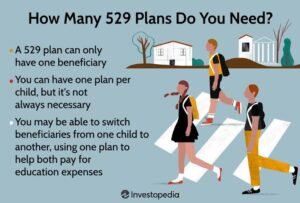
The account owner may be able to change the beneficiary to another eligible family member. This could include a sibling, parent, spouse, or another qualifying relative under federal rules.
The new beneficiary can use the funds for their own qualified education expenses, subject to applicable requirements.
The account may also be used for eligible vocational training, apprenticeships, graduate education, or other qualifying programs.
Another option may be a qualifying Roth IRA rollover for the beneficiary, subject to strict federal requirements.
The ability to change beneficiaries or use a qualifying rollover can help reduce the possibility of unused funds, but families should understand the relevant restrictions before relying on these options.
Understanding the 529-to-Roth IRA Rollover Rule
One significant recent development in 529 planning is the ability to transfer certain unused 529 funds to a Roth IRA for the beneficiary.
This option was introduced through federal legislation and is subject to important restrictions.
A qualifying rollover is generally limited to a lifetime maximum of $35,000 per beneficiary. The 529 account must have been maintained for at least 15 years, and the funds being rolled over must satisfy applicable five-year contribution and earnings rules.
The rollover is also subject to annual Roth IRA contribution limits and the beneficiary’s available eligible compensation requirements. It is generally made through a direct trustee-to-trustee transfer.
The beneficiary must be the Roth IRA owner, and the rollover cannot simply be made to the account owner’s retirement account.
The rule does not mean that every unused 529 balance can automatically be transferred to a Roth IRA. The 15-year account requirement, five-year rule, annual limits, compensation requirements, and other applicable conditions must be satisfied.
There may also be unresolved or changing administrative details in how particular situations are handled. Families should check current IRS guidance and consult a qualified tax professional before arranging a rollover.
This feature can provide another option for beneficiaries who do not need all their education savings, but it should not be the only reason to open a 529 plan.
529 Plans and Financial Aid
Families often ask whether owning a 529 plan will affect eligibility for college financial aid.
The answer depends on who owns the account, who the beneficiary is, and which financial aid rules apply.
Under the federal Free Application for Federal Student Aid, or FAFSA, the treatment of parent-owned and student-owned education savings accounts can differ.
A 529 account owned by a dependent student’s parent is generally reported as a parent asset. Parent assets are treated differently from student assets in the federal financial aid formula.
The treatment of grandparent-owned 529 accounts has also changed under recent FAFSA rules. Distributions from grandparent-owned 529 plans are generally not reported as student income on the current FAFSA form in the same way they were under earlier rules.
However, other financial aid applications, including some institutional forms, may use different methodologies.
Families should review current FAFSA instructions and the financial aid policies of colleges they are considering.
Do not avoid saving for education solely because of concerns about financial aid. The potential value of having education savings may outweigh the effect of the account on aid eligibility, depending on the family’s circumstances.
529 Plans and Gift Tax Rules
Contributions to a 529 plan are generally treated as gifts to the beneficiary for federal gift-tax purposes.
The annual gift-tax exclusion allows individuals to give up to a specified amount per recipient each year without using their lifetime gift and estate tax exemption, subject to current law.
529 plans also provide a special five-year election that allows a contributor to spread a larger contribution over five years for gift-tax purposes, if the applicable requirements are met.
This can allow a grandparent or parent to contribute a substantial amount at once while treating it as if it were contributed evenly over five years.
The five-year election involves specific tax reporting requirements. Contributors should consult a tax professional when making large contributions, especially if they expect to make other gifts to the same beneficiary during the five-year period.
The rules and exclusion amounts can change over time, so verify the current figures before contributing.
Common 529 Plan Mistakes to Avoid
Choosing a Plan Without Comparing Fees
A plan with higher fees can reduce long-term investment growth. Review account charges, fund expense ratios, and administrative costs before selecting a program.
Ignoring State Tax Benefits
Some families choose an out-of-state plan without first checking whether their home state offers a contribution deduction or credit.
The state tax benefit may make a home-state plan more attractive, but compare it with the total plan costs and features.
Contributing More Than You Can Afford
Education savings are important, but they should not come at the expense of basic household stability.
Avoid contributing so much that you cannot pay essential bills, maintain emergency savings, or meet other financial responsibilities.
Taking Too Much Investment Risk Near College
A market decline shortly before college can reduce the amount available for tuition and other expenses.
Review investment allocations as the beneficiary approaches college age and understand how age-based portfolios adjust risk.
Choosing Investments Without Understanding Them
Do not select a portfolio simply because it had strong historical performance. Review the investment strategy, risk level, fees, and diversification.
Forgetting to Keep Records
Maintain receipts, tuition statements, and withdrawal records. Good documentation helps demonstrate that distributions were used for qualified expenses.
Making Withdrawals in the Wrong Tax Year
The timing of distributions should generally align with the year in which qualified expenses are incurred and paid.
Review tax-year rules before requesting a large withdrawal.
Assuming Every Education Expense Qualifies
Some costs that appear education-related may not qualify under federal rules. Confirm the expense category and applicable limits before using 529 funds.
How Grandparents Can Help With a 529 Plan
Grandparents often want to help grandchildren prepare for college. A 529 plan can provide a structured way to make education gifts.
A grandparent can contribute to a parent-owned account or, where permitted, open a separate account for the grandchild.
Contributing to a parent-owned account may make account management easier because the parents retain control. A grandparent-owned account may offer different estate-planning or personal-control benefits.
Before selecting an arrangement, review gift-tax rules, financial aid treatment, successor ownership, and the plan’s contribution procedures.
Some plans offer online gifting features that allow relatives to contribute directly to a beneficiary’s account. This can make birthdays, holidays, and other family occasions opportunities to support education savings.
Large gifts should be planned carefully, particularly when the contributor intends to use the five-year gift-tax election.
Can You Have More Than One 529 Plan?
Yes, a beneficiary can generally have multiple 529 accounts. For example, parents may own one account while grandparents own another.
A family might also maintain accounts in different states, depending on the rules and benefits involved.
However, having multiple accounts can make financial management more complicated. The family must monitor total contributions, investment allocations, fees, withdrawals, and tax documentation.
If several accounts exist, coordinate withdrawals carefully so that the same qualified expense is not used to support multiple tax benefits.
Before opening additional accounts, decide whether another account offers a genuine advantage. A single well-managed plan may be sufficient for many households.
529 Plan vs. Regular Savings Account
A regular savings account and a 529 plan serve different purposes.
A savings account generally offers easy access to money and may provide a predictable interest rate, depending on the bank and account terms. The money can usually be used for any purpose without education-related restrictions.
A 529 plan is designed specifically for qualified education savings. Its main advantage is the potential for tax-free investment growth and qualified withdrawals.
However, 529 investment accounts can lose value because of market fluctuations. They also have rules concerning nonqualified withdrawals and certain account changes.
A savings account may be suitable for money needed in the short term or for families who want maximum flexibility. A 529 plan may be more attractive for long-term education goals.
Some families use both: a 529 plan for long-term education savings and a regular savings account for shorter-term expenses or emergency needs.
529 Plan vs. Coverdell Education Savings Account
A Coverdell Education Savings Account, commonly known as a Coverdell ESA, is another tax-advantaged education savings option.
Like a 529 plan, a Coverdell account may provide tax-free growth and qualified tax-free withdrawals.
However, Coverdell accounts have a relatively low annual contribution limit compared with the high aggregate limits of 529 plans. They also have income restrictions for contributors and age-related rules for beneficiaries, subject to exceptions.
Coverdell accounts may offer broader investment flexibility because account owners can often select investments from a wider range of available securities through the financial institution.
A 529 plan may be more practical for families who want higher contribution capacity and a simpler education savings structure.
The best choice depends on the family’s income, contribution goals, investment preferences, and education needs.
How to Monitor Your 529 Plan Over Time
Opening an account is only the beginning. Families should review the account periodically to ensure it remains aligned with their education goals.
Check the balance, contributions, investment performance, fees, and selected portfolio at least once or twice a year.
Review whether automatic contributions are still affordable. If household income increases, consider raising the monthly amount. If financial circumstances change, adjust contributions to maintain a realistic budget.
As the beneficiary gets closer to college age, evaluate the investment risk. A portfolio suitable for a newborn may not be appropriate for a student who will need the money within a year or two.
Update account information after major life events. Confirm that contact details, beneficiary information, and successor ownership arrangements remain accurate.
Keep a record of contributions and withdrawals. This can help with tax reporting, account management, and family financial planning.
Frequently Asked Questions About Starting a 529 Plan
Can I Open a 529 Plan Before My Child Is Born?
Some plans allow an account to be opened with an eligible beneficiary who may later be changed, depending on the plan’s rules. A parent may also open an account for themselves and change the beneficiary after the child is born.
Review the specific plan requirements before using this approach.
Can I Open a 529 Plan for Myself?
Yes. Adults can open 529 accounts for their own qualified education expenses. The account owner and beneficiary can be the same person.
Do I Have to Use My State’s 529 Plan?
Not necessarily. Many plans accept out-of-state residents. However, state tax benefits may depend on whether you contribute to your home-state plan.
Is There a Minimum Monthly Contribution?
Minimums vary by plan. Some programs allow relatively small initial deposits and recurring contributions, while others have higher requirements.
Are 529 Contributions Tax-Deductible?
Contributions are not deductible on your federal income tax return. However, some states offer deductions or credits for eligible contributions.
Can I Change the Beneficiary?
Generally, an account owner can change the beneficiary to another eligible family member without federal income tax or penalty, provided the change satisfies applicable rules.
Can a 529 Plan Be Used for Trade School?
Yes, certain eligible vocational and trade schools may qualify. The institution must meet applicable federal requirements.
Can I Use a 529 Plan for Graduate School?
Qualified expenses at eligible graduate programs may generally be paid using 529 funds.
What Happens If My Child Gets a Scholarship?
A scholarship may create an exception to the 10% additional federal tax on certain nonqualified withdrawals up to the scholarship amount. The earnings portion may still be subject to ordinary income tax.
Are 529 Plans Guaranteed?
No. College savings plans that invest in market-based portfolios are not guaranteed to earn a particular return. Investment values can rise or fall.
Can Relatives Contribute to My Child’s 529 Account?
Many plans allow relatives and other individuals to contribute, either directly or through gifting features.
Conclusion
Starting a 529 college savings plan in the USA can be a practical way to prepare for future education expenses. These accounts offer tax advantages, flexible beneficiary options, and investment choices that can help families build education savings over time.
The process begins with identifying your education goals and comparing available state plans. Review investment options, fees, contribution requirements, and state tax benefits before selecting an account. Then choose an account owner and beneficiary, complete the application, make an initial contribution, and establish a realistic savings schedule.
A 529 plan does not need to cover the entire cost of college to be valuable. Regular contributions over many years can help reduce the amount students and families may need to borrow or pay from current income.
It is also important to understand the rules. Qualified expenses, withdrawal timing, financial aid treatment, gift-tax limits, and the Roth IRA rollover option all have specific requirements. Review current federal and state guidance before making decisions that could affect your taxes or financial aid.
Most importantly, balance education savings with your other financial responsibilities. Maintain emergency savings, manage high-interest debt, and continue preparing for retirement while building a college fund.
By starting early, contributing consistently, choosing appropriate investments, and reviewing the account over time, families can make meaningful progress toward funding a child’s future education.