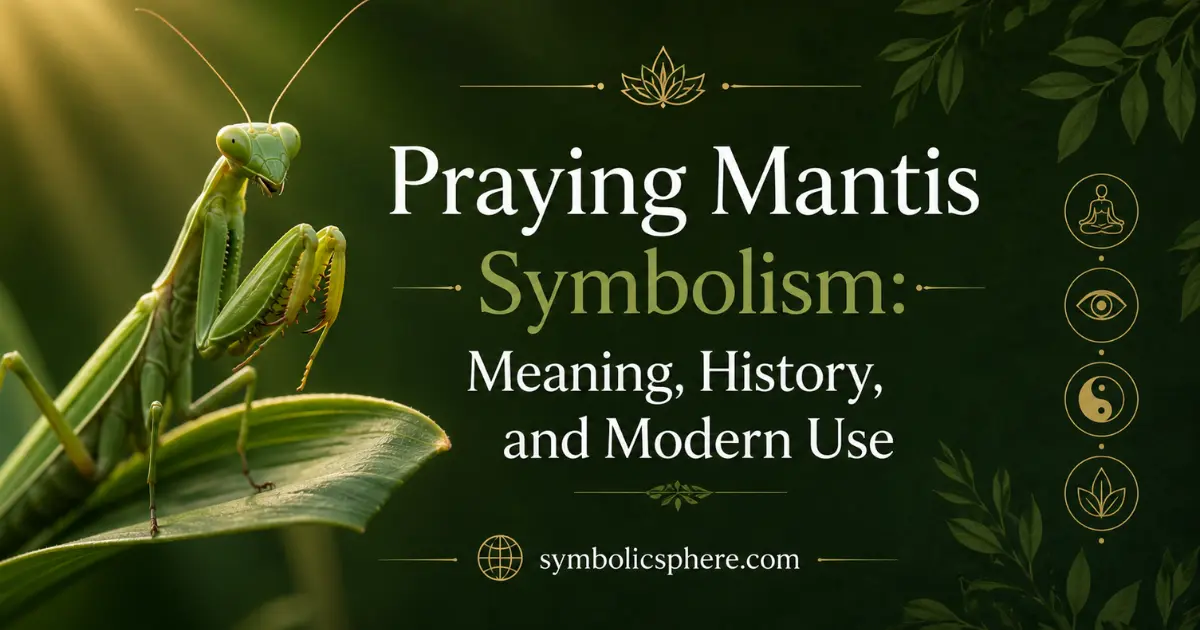
The praying mantis is one of the most recognizable insects in the world. With its folded front legs, slow and deliberate movements, and watchful posture, it has inspired stories, beliefs, and artistic interpretations across many cultures. Today, praying mantis symbolism often represents patience, mindfulness, focus, and careful decision-making.
Many people encounter a praying mantis in their garden, on a hiking trail, or even on a porch during warmer months. Because the insect tends to remain still before striking with remarkable speed, it naturally became associated with calm observation rather than constant action.
In the United States, people generally see the praying mantis as a positive sign that encourages slowing down, paying attention, and acting with purpose instead of impulse. While some older traditions added spiritual or religious meanings, modern interpretations are usually centered on awareness, self-control, and respect for nature.
Quick Answer
Praying mantis symbolism most commonly represents patience, mindfulness, focus, and thoughtful action in modern American culture. Historically, different cultures also associated the insect with wisdom, spiritual awareness, protection, and careful observation because of its distinctive posture and hunting behavior.
TL;DR
- Represents patience before action.
- Symbolizes focus and careful observation.
- Appears in many cultural traditions worldwide.
- Often viewed positively in the United States.
- Popular in tattoos and mindful lifestyle imagery.
- Its meaning comes largely from natural behavior.
What Is a Praying Mantis?
A praying mantis is an insect belonging to the order Mantodea, which includes more than 2,000 species worldwide. It is easy to recognize because of its triangular head, large compound eyes, flexible neck, and front legs folded beneath its body.
Its common English name comes from the way those front legs resemble hands folded in prayer. Although the posture is simply part of its anatomy for catching prey, humans naturally connected the insect’s appearance with meditation, reverence, and contemplation.
Unlike many insects that move constantly, the praying mantis often remains motionless for long periods before making an incredibly fast strike. This contrast between stillness and precision has shaped nearly every symbolic interpretation attached to it.
What the Praying Mantis Commonly Symbolizes Today
In modern American culture, several meanings appear consistently.
- Patience
- Mindfulness
- Self-control
- Focus
- Strategic thinking
- Awareness
- Precision
- Calm confidence
Rather than encouraging endless activity, the praying mantis symbolizes knowing when not to act. It reminds people that timing can matter as much as effort.
This symbolism appeals to people trying to balance busy schedules, avoid impulsive decisions, or develop greater emotional control.
How the Praying Mantis Became a Symbol
Most animal symbolism begins with observation, and the praying mantis is no exception.
Ancient observers noticed several unusual characteristics:
- It appears calm for long periods.
- It turns its head toward movement.
- It seems to watch everything nearby.
- It strikes only when necessary.
- It rarely wastes energy.
These behaviors led people to associate the insect with wisdom rather than aggression.
Its folded forelegs also encouraged comparisons to prayer in Europe, while other societies interpreted the posture differently depending on their own religious and cultural traditions.
Unlike mythical creatures, the praying mantis earned its symbolism through everyday observation of real animal behavior.
Ancient and Traditional Cultural Interpretations
Different civilizations interpreted the praying mantis according to their own beliefs.
Ancient Greece
The Greek word mantis actually means “prophet” or “seer.” Because of this linguistic connection, the insect became associated with foresight and guidance rather than simple hunting ability.
Ancient China
Chinese culture admired the mantis for its courage, alertness, and quick reactions. Martial artists even developed forms inspired by its movements, emphasizing precision instead of brute strength.
African Traditions
Among several African communities, encountering a praying mantis was sometimes considered fortunate or meaningful. Some traditions viewed it as a messenger, while others treated it as a symbol of wisdom or respect for nature.
European Folklore
In parts of Europe, folklore suggested the insect could point travelers in the right direction or symbolize divine attention because of its prayer-like posture. These beliefs varied widely and were never universal.
What It Means in the United States
Americans generally interpret the praying mantis through a practical rather than religious lens.
Today it often represents:
- Taking time before making decisions
- Living intentionally
- Paying attention to one’s surroundings
- Appreciating nature
- Finding calm during stressful situations
Many people also consider seeing a praying mantis a reminder to pause and become more aware of the present moment. While there is no scientific evidence that such encounters carry supernatural messages, many individuals treat them as meaningful personal experiences.
The insect has also become popular in gardening communities because it naturally helps control certain pest populations without chemical pesticides. This practical role reinforces its image as a beneficial presence.
Symbolism Across Cultures
| Context | Meaning in the USA | Common Associations | Notes |
|---|---|---|---|
| Personal growth | Mindfulness | Patience, focus | Most common modern meaning |
| Nature | Ecological balance | Beneficial insect | Popular among gardeners |
| Chinese tradition | Courage and precision | Martial arts | Based on movement and behavior |
| European folklore | Guidance | Prayer posture | Regional folk beliefs |
| Personal symbolism | Intentional living | Calm decision-making | Common in self-help culture |
Emotional and Psychological Meaning
Psychologically, the praying mantis symbolizes qualities many people hope to develop.
Calm under pressure
Its ability to remain still before acting reflects emotional regulation rather than panic.
Observation before judgment
Instead of reacting immediately, the mantis appears to evaluate its surroundings first. Symbolically, this encourages thoughtful responses.
Confidence without attention-seeking
Unlike brightly colored animals that rely on display, many mantis species blend into leaves or flowers. This has inspired interpretations centered on quiet confidence rather than public recognition.
Independence
Praying mantises live largely solitary lives. For some people, this represents self-reliance and personal growth without depending heavily on outside approval.
Spiritual and Religious Interpretations
The praying mantis appears in various spiritual discussions, although its meaning differs greatly among traditions.
Some people associate it with:
- Prayer
- Meditation
- Inner stillness
- Awareness
- Listening before speaking
Its folded posture naturally resembles prayer, but this resemblance is anatomical rather than religious.
In modern spirituality, many people interpret an unexpected mantis encounter as encouragement to slow down, reflect, or become more attentive to their lives. These interpretations are personal beliefs rather than established religious teachings.
No major world religion considers the praying mantis a central sacred symbol.
Why the Praying Mantis Appears in Tattoos
Praying mantis tattoos have become increasingly popular among people seeking designs with thoughtful rather than dramatic symbolism.
Common tattoo meanings include:
- Patience
- Mental discipline
- Personal transformation
- Independence
- Precision
- Quiet strength
Some tattoo designs emphasize realism, highlighting the insect’s distinctive shape, while others blend it with flowers, geometric patterns, or botanical themes.
Unlike tattoos of lions or wolves that often communicate outward strength, a praying mantis tattoo usually emphasizes internal qualities such as restraint and awareness.
The Praying Mantis in Art, Fashion, and Popular Culture
The insect’s unusual appearance makes it visually memorable.
Artists frequently use its angular body and expressive posture to represent concentration or mystery. Designers appreciate its clean lines and symmetrical form, while photographers often highlight its striking eyes and camouflage.
In movies, animation, and video games, mantis-inspired characters are often portrayed as:
- Skilled strategists
- Martial artists
- Wise mentors
- Silent observers
- Patient hunters
Although fictional portrayals sometimes exaggerate these traits, they build upon the insect’s real-world behavior.
Nature, Survival, and Environmental Symbolism
Beyond personal symbolism, the praying mantis represents ecological balance.
Because it feeds on many insects, it contributes to healthy ecosystems and natural pest control. Gardeners often welcome mantises because they reduce certain pest populations without relying on pesticides.
Environmental symbolism connected to the praying mantis includes:
- Respect for biodiversity
- Natural balance
- Sustainable gardening
- Healthy ecosystems
- Coexistence with wildlife
Its presence reminds people that even small creatures play valuable roles within larger ecological systems.
Common Misunderstandings About the Praying Mantis
Several myths have shaped public perception.
Myth: Every female eats the male.
While sexual cannibalism has been observed in some species, it does not occur after every mating and is less common in natural conditions than popular media often suggests.
Myth: Seeing a praying mantis predicts future events.
Many cultures developed beliefs about mantis encounters, but there is no evidence that they predict luck, fortune, or specific life events.
Myth: The insect is always peaceful.
Although it appears calm, the praying mantis is an efficient predator. Its symbolic association with peace comes from its posture and behavior before striking, not from a gentle lifestyle.
Understanding these distinctions helps separate biological facts from symbolic interpretation.
How Its Symbolism Has Changed Over Time
Earlier interpretations often focused on religion, prophecy, or supernatural guidance.
Over time, especially in the United States, the emphasis shifted toward practical personal qualities such as:
- Mindfulness
- Emotional balance
- Intentional living
- Strategic thinking
- Patience
This reflects broader cultural trends that value mental wellness, self-improvement, and thoughtful decision-making.
Today, people are less likely to view the praying mantis as an omen and more likely to see it as a reminder to slow down and remain attentive.
When the Symbol Is Misused
Modern symbolism sometimes stretches beyond historical evidence.
Social media posts occasionally claim that every praying mantis sighting carries a universal spiritual message or predicts major life changes. While these interpretations may be meaningful on a personal level, they are not supported by longstanding historical traditions across all cultures.
Another common misuse is portraying the mantis as either entirely peaceful or purely violent. In reality, its symbolism comes from the balance between patience and decisive action.
Keeping biological facts separate from personal beliefs allows for a more accurate understanding of the symbol.
Why People Continue to Connect With the Praying Mantis
The praying mantis remains meaningful because its behavior reflects situations people face every day.
Modern life often rewards speed, constant communication, and immediate reactions. The mantis offers a contrasting image: observe carefully, remain calm, and act only when the time is right.
Whether someone encounters one in a backyard, chooses it as body art, or simply admires its unusual appearance, the insect encourages qualities that many people strive to cultivate—patience, awareness, and purposeful action.
FAQs
What does a praying mantis symbolize spiritually?
Many people associate the praying mantis with mindfulness, quiet reflection, and paying closer attention to life’s direction. These interpretations are personal or cultural beliefs rather than teachings shared by all religions.
Is seeing a praying mantis considered good luck?
In many cultures, seeing a praying mantis is viewed as a positive sign or fortunate encounter. In the United States, people are more likely to interpret it as a reminder to slow down and observe rather than as a predictor of future events.
What does a praying mantis tattoo mean?
A praying mantis tattoo commonly represents patience, discipline, focus, and thoughtful decision-making. Some people also choose it to symbolize personal growth, resilience, or quiet confidence.
Does the praying mantis have a religious meaning?
Yes, its prayer-like posture symbolizes faith, patience, stillness, and spiritual reflection. However, the praying mantis is not an official biblical symbol, and interpretations vary by culture and belief.
Why is the praying mantis associated with patience?
The insect often waits motionless before capturing prey, conserving energy until the right opportunity appears. This natural behavior has made it a symbol of restraint and careful timing.
Is the praying mantis a positive or negative symbol?
Most modern interpretations are positive, emphasizing awareness, calmness, and intentional action. Although the mantis is a predator, its symbolism generally focuses on wisdom and self-control rather than aggression.
Conclusion
The praying mantis stands apart from many symbolic animals because its meaning comes directly from observable behavior. As the Smithsonian explains, mantises are ambush predators that sit still and wait for prey, and their calm posture, careful movements, and remarkable precision have inspired ideas of patience, focus, mindfulness, and deliberate action across different cultures and historical periods.
Today, praying mantis symbolism is most often understood in the United States as a reminder to pause before acting, pay attention to the present moment, and approach challenges with intention instead of impulse. Rather than promising luck or predicting the future, the praying mantis offers a grounded lesson drawn from nature itself: careful observation and well-timed action can be just as valuable as constant movement.


[…] than anyone drawing on folklore. This consumer use represents one of the clearest breaks from the symbol’s older meaning: the ghostly, omen-bearing black dog of British legend is almost entirely absent from this space, […]
[…] elephant statue symbolism matters because the meaning shifts depending on details most buyers never think about — which way the trunk points, whether […]