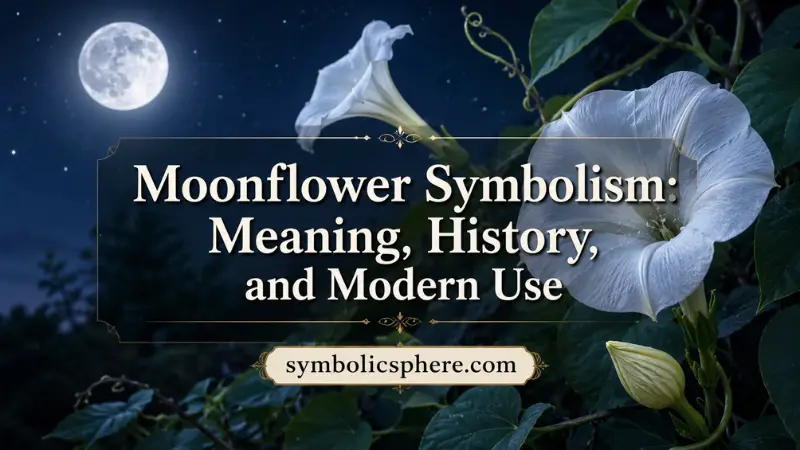
Moonflowers are unlike most garden blooms. Their large white flowers remain tightly closed during the day and slowly unfold as evening approaches, filling the air with a sweet fragrance after sunset. Because of this unusual blooming habit, moonflower symbolism has become closely associated with ideas that emerge in darkness rather than daylight—hope, quiet transformation, hidden beauty, and life’s fleeting moments.
In the United States, moonflowers have become popular in nighttime gardens, wedding displays, photography, and symbolic floral gifts. Their striking appearance invites curiosity, while their short-lived blossoms encourage people to appreciate beauty that doesn’t last forever.
Although the flower has different meanings across cultures, its modern symbolism is largely shaped by its natural behavior. Rather than representing mystery for its own sake, the moonflower reminds people that some of life’s most meaningful experiences happen during quiet moments that often go unnoticed.
Quick Answer
Moonflower symbolism most commonly represents hope, transformation, inner peace, and beauty that appears during life’s darkest moments in modern American culture. Historically, its nighttime blooming has also connected it with the moon, spiritual reflection, temporary beauty, and the natural rhythms of life.
TL;DR
- Symbolizes hope during difficult times.
- Represents personal growth and quiet transformation.
- Reflects beauty that exists only briefly.
- Associated with moonlight and nighttime reflection.
- Popular in American gardens, weddings, and tattoos.
- Encourages appreciation for life’s fleeting moments.
What Is a Moonflower?
The name “moonflower” commonly refers to several night-blooming plants, but in American gardens it most often describes Ipomoea alba, a climbing vine known for its large white trumpet-shaped flowers.
Each blossom opens at dusk, reaches full beauty during the evening, attracts nighttime pollinators such as moths, and usually fades by the following morning. This short blooming period is the foundation of nearly every symbolic meaning attached to the flower.
Unlike brightly colored flowers that compete for daytime attention, moonflowers stand out through contrast. Their white petals seem to glow under moonlight, making them memorable additions to gardens designed for evening enjoyment.
The Core Meaning of Moonflower Symbolism Today
Modern American interpretations generally center around several closely connected ideas.
- Hope during uncertain times
- Quiet personal transformation
- Inner peace
- Hidden beauty
- New beginnings
- Acceptance of life’s temporary nature
- Emotional resilience
Many people view the moonflower as a reminder that growth does not always happen publicly. Just as the flower blooms when the world becomes quieter, personal development often occurs during periods of reflection rather than celebration.
This interpretation has become especially common in wellness communities, inspirational writing, and social media, where the flower frequently represents finding light during difficult experiences.
Why Night Blooming Shapes Its Symbolism
The moonflower’s symbolism comes directly from its biology.
Most flowers depend on daytime insects such as bees. Moonflowers instead evolved to attract nighttime pollinators, especially hawk moths. Their white petals reflect moonlight, making them easier to locate after sunset, while their fragrance becomes strongest in the evening.
People naturally connected these characteristics with symbolic ideas.
| Context | Meaning in the USA | Common Associations | Notes |
|---|---|---|---|
| Night blooming | Hope in darkness | Resilience, optimism | Most recognized meaning |
| White petals | Peace and purity | Weddings, remembrance | Non-religious and religious uses |
| Short lifespan | Temporary beauty | Gratitude, mindfulness | Appreciating the present |
| Evening fragrance | Quiet comfort | Reflection, calm | Often linked with meditation |
| Climbing vine | Personal growth | Progress, determination | Represents gradual development |
Rather than assigning symbolic meaning arbitrarily, people interpreted what they observed in nature.
Ancient Roots and Early Symbolism
Unlike roses or lilies, moonflowers do not carry a single ancient symbolic tradition stretching across thousands of years. Their meanings developed gradually through observations of night-blooming plants in tropical and subtropical regions.
In parts of Central and South America, where several night-blooming species grow naturally, evening flowers became associated with lunar cycles and seasonal change.
As botanical exploration expanded during the eighteenth and nineteenth centuries, moonflowers spread into ornamental gardens throughout Europe and North America. Gardeners admired not only their appearance but also the unusual experience of watching blossoms slowly unfold after sunset.
Victorian flower symbolism occasionally connected white night-blooming flowers with modesty, secret affection, and quiet devotion, though moonflowers never developed the extensive symbolic language attached to roses or violets.
What Moonflowers Symbolize in the United States
American interpretations tend to focus less on folklore and more on personal meaning.
Today, moonflowers often symbolize:
- Finding hope after hardship
- Emotional healing
- Appreciating peaceful moments
- Beginning a new chapter in life
- Remaining optimistic despite uncertainty
The flower also appears in evening garden designs intended to create calm outdoor spaces. Landscape designers frequently pair moonflowers with silver foliage, white blossoms, and reflective water features to create relaxing nighttime environments.
Because many Americans value mindfulness and mental wellness, the flower has increasingly become a symbol of slowing down and paying attention to moments that might otherwise pass unnoticed.
Moonflower Symbolism in Different Cultures
Although interpretations vary, several themes appear repeatedly.
East Asian Perspectives
Night-blooming flowers are often appreciated for their connection to seasonal beauty and impermanence. Rather than emphasizing darkness, they highlight nature’s changing rhythms.
Western Symbolism
In Europe and North America, white flowers commonly represent peace, innocence, remembrance, and sincerity. Moonflowers inherit many of these associations while adding their distinctive nighttime identity.
Spiritual Traditions
Some spiritual traditions associate moonlight with contemplation, intuition, and emotional awareness. Moonflowers sometimes appear in meditation gardens or symbolic artwork because they bloom when daily activity has slowed.
Despite these differences, most cultures emphasize observation of nature rather than superstition.
Emotional and Psychological Meaning
Psychologically, moonflowers communicate calm rather than excitement.
People often identify them with emotional qualities such as:
- Patience
- Reflection
- Quiet confidence
- Acceptance
- Healing
- Emotional maturity
The flower reminds people that not every achievement requires public recognition. Many personal changes happen gradually and privately, much like a blossom opening after sunset while much of the world sleeps.
This makes moonflowers especially meaningful for individuals recovering from grief, major life changes, or stressful periods.
Moonflower Symbolism in Love and Relationships
Moonflowers have become increasingly popular in romantic symbolism because they bloom during the evening, a time traditionally associated with intimacy, conversation, and shared quiet moments.
They may represent:
- Lasting affection
- Trust
- Emotional honesty
- Gentle love
- Patience within relationships
Unlike red roses, which often symbolize passionate romance, moonflowers suggest a calmer form of love built through understanding and emotional support.
For this reason, they occasionally appear in anniversary celebrations and evening wedding ceremonies.
Why Moonflowers Appear in Tattoos
Moonflower tattoos have gained popularity over the past decade, especially among people seeking meaningful botanical designs.
Common interpretations include:
- Overcoming personal struggles
- Starting over
- Healing after loss
- Personal growth
- Finding peace
- Living authentically
Many tattoo artists combine moonflowers with moons, stars, moths, butterflies, or crescent shapes to reinforce themes of nighttime transformation.
Some people also choose moonflower tattoos simply because they appreciate the flower’s graceful appearance rather than any specific symbolic meaning.
Moonflowers in Home Décor, Fashion, and Art
The flower’s elegant white blossoms make it popular in decorative settings.
Today, moonflower imagery appears in:
- Botanical wall art
- Garden-themed home décor
- Jewelry
- Wedding invitations
- Fabric patterns
- Candle packaging
- Journal covers
Artists often use moonflowers to create peaceful scenes rather than dramatic ones. Their association with moonlight naturally complements minimalist design styles and calming interior spaces.
In fashion, moonflower patterns often evoke elegance, simplicity, and natural beauty.
Moonflowers in Literature and Popular Culture
Writers frequently use moonflowers as visual symbols instead of direct metaphors.
Because the flowers bloom briefly and at night, they often represent:
- A turning point
- Hidden emotions
- Unexpected hope
- Quiet courage
- Fleeting happiness
Modern novels, films, photography, and digital artwork sometimes feature moonflowers during emotionally significant scenes where characters experience reflection or personal change.
The flower’s symbolism works because readers immediately recognize its unusual blooming pattern, even without lengthy explanation.
Common Misunderstandings About Moonflower Symbolism
Several misconceptions surround moonflowers.
One common belief is that they universally symbolize death because they bloom at night. In reality, most modern interpretations connect them with hope, peace, and transformation rather than loss.
Another misunderstanding is that moonflowers belong exclusively to mystical traditions. While they occasionally appear in spiritual imagery, their symbolism mostly developed from careful observation of their natural growth cycle.
Some also confuse moonflowers with other white night-blooming species, assuming all share identical meanings. Although similar plants often overlap symbolically, each species has developed its own cultural associations.
How Moonflower Symbolism Has Changed Over Time
The meaning of moonflowers has gradually shifted over the last two centuries.
Early gardeners admired them primarily for their unusual blooming habits and ornamental value.
Later, writers and artists began using them as symbols of nighttime beauty and temporary joy.
Today, especially in American culture, moonflowers frequently represent emotional resilience, mindfulness, self-discovery, and finding hope during difficult periods.
This evolution reflects broader cultural changes. Modern audiences often seek symbols that emphasize personal growth and emotional well-being rather than rigid traditional meanings.
Positive and Negative Associations
Like many symbols, moonflowers carry both positive and cautionary interpretations.
Positive meanings
- Hope
- Renewal
- Healing
- Peace
- Beauty
- Reflection
- Growth
Possible cautionary meanings
- Temporary opportunities
- Impermanence
- Solitude
- Life’s changing seasons
These cautionary meanings are not negative in themselves. Instead, they encourage acceptance that beautiful experiences, like moonflower blossoms, do not last forever.
FAQs
What does a moonflower symbolize?
A moonflower most commonly symbolizes hope, transformation, inner peace, and beauty that appears during difficult times. Its nighttime blooming makes it a natural reminder that positive change often happens quietly.
Is a moonflower a good tattoo symbol?
Yes. Many people choose moonflower tattoos to represent healing, resilience, personal growth, or overcoming challenges. Others simply appreciate the flower’s elegant appearance and nighttime associations.
Does the moonflower have religious symbolism?
The moonflower is not tied to one specific religion. Some people connect it with spiritual reflection or renewal because of its relationship with the moon and nighttime, but these meanings are generally symbolic rather than doctrinal.
Why does the moonflower represent hope?
Because it opens after sunset, many people see it as proof that beauty and growth can appear even during darkness. This natural behavior has inspired its association with optimism and perseverance.
Is moonflower symbolism positive or negative?
Most modern interpretations are positive. Although the flower’s short lifespan reminds people that life is temporary, this idea usually encourages gratitude rather than pessimism.
What does giving someone a moonflower mean?
Giving a moonflower often expresses encouragement, admiration, or emotional support. It can symbolize wishing someone peace, healing, or success during a new chapter in life.
Conclusion
Moonflowers stand apart because they bloom at night, when many other flowers have already closed for the day. Moonflowers stand apart because they bloom when many other flowers have already closed for the day. That simple characteristic has inspired generations of gardeners, artists, and writers to see them as reminders of hope, quiet strength, and beauty found in unexpected moments.
Today, moonflower symbolism reflects values that resonate strongly in modern American culture: resilience, personal growth, mindfulness, and appreciation for life’s brief but meaningful experiences. Rather than promising certainty, the moonflower encourages us to recognize that even the darkest hours can reveal unexpected beauty if we take the time to notice it.