Introduction
Investing is one of the most effective ways to build long-term wealth, prepare for retirement, and work toward financial independence. However, many beginners in the United States find investing confusing because of the wide variety of stocks, bonds, mutual funds, exchange-traded funds, and other financial products available. Understanding which investments to choose can feel overwhelming, especially for people who have limited experience with the stock market. Index funds offer a straightforward way to begin investing without requiring investors to research individual companies or make frequent trading decisions.
Index funds have become popular among American investors because they provide broad market exposure, relatively low costs, and a simple investment strategy. Instead of trying to identify the next successful company, investors can purchase a fund designed to track a particular market index. Depending on the index, the fund may hold shares in hundreds or thousands of companies, allowing investors to participate in the performance of a broader segment of the market.
For example, a fund tracking the S&P 500 seeks to follow an index representing approximately 500 leading publicly traded companies in the United States. Other index funds track the total U.S. stock market, international stocks, government bonds, corporate bonds, or specific investment sectors. Each option has different characteristics, risks, and potential benefits.
One reason index funds appeal to beginners is that they can reduce the need for complicated investment decisions. Investors can choose a diversified fund, contribute money regularly, and maintain a long-term approach. This does not eliminate investment risk, and index funds can lose value when the markets decline. Nevertheless, a disciplined strategy can help investors avoid some common mistakes associated with frequent trading and attempts to predict short-term market movements.
In the United States, beginners can purchase index funds through brokerage accounts, employer-sponsored retirement plans, and individual retirement accounts. The appropriate account depends on financial goals, tax considerations, eligibility, and how soon the money may be needed.
This guide explains how index funds work, how to choose suitable funds, where to purchase them, what fees to consider, and how to develop a long-term investment plan. It also covers common mistakes, tax considerations, and practical examples to help beginners understand the process of investing in index funds in the USA.
1. What Are Index Funds?
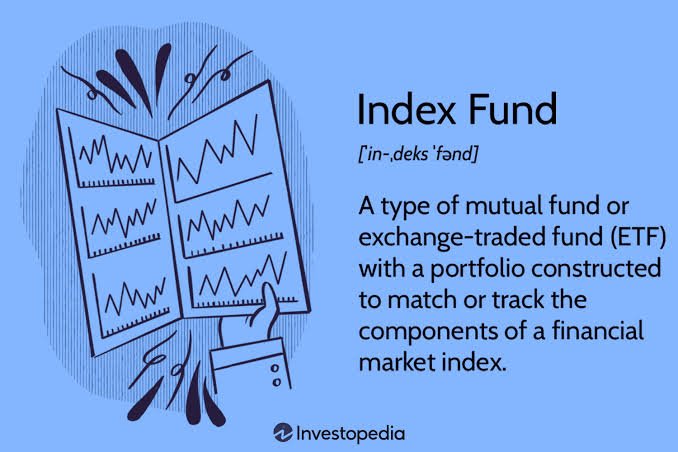
An index fund is an investment fund designed to follow the performance of a specific market index. Rather than relying on a manager to select investments based primarily on individual predictions, the fund generally follows a predefined set of rules associated with its benchmark index.
A market index measures the performance of a selected group of investments. For example, an index might track large American companies, the broader U.S. stock market, international businesses, or a collection of government bonds. The index itself is a measurement, while an index fund is an investment product that attempts to replicate its performance.
When investors purchase shares of an index fund, they gain exposure to the investments held by that fund. They do not need to purchase every underlying stock or bond individually. The fund manages the holdings according to its investment objective, subject to its methodology, expenses, and tracking limitations.
Index funds can be structured as mutual funds or exchange-traded funds, commonly known as ETFs. Both structures can provide index exposure, but they differ in how investors buy and sell shares, how transactions are processed, and how minimum investment requirements may apply.
One of the main advantages of index funds is diversification. Instead of depending entirely on the success of one company, investors can spread their exposure across many businesses or other assets. Diversification can reduce the impact of a poor result from an individual holding, although it cannot eliminate losses caused by a broad market decline.
Index funds are not guaranteed investments. Their values can rise or fall, and investors may receive less money than they originally invested. Their suitability depends on the underlying assets, the investor’s time horizon, financial circumstances, and tolerance for risk.
For beginners, the central idea is simple: an index fund allows investors to follow a defined portion of the market through a single investment rather than selecting every security themselves.
2. How Do Index Funds Work?
Index funds operate by attempting to match the performance of a benchmark index before accounting for fund expenses and certain tracking differences. The fund follows the index’s investment methodology instead of trying to outperform the benchmark through frequent discretionary stock selection.
Suppose an index tracks a group of 500 American companies. An index fund designed to follow that benchmark may hold shares in the companies included in the index, generally in proportions intended to reflect their respective index weights. If the index uses market capitalization weighting, companies with larger eligible market values typically have greater influence on its performance.
When the underlying stocks increase in value, the fund’s net asset value will generally rise as well. When the stocks decline, the fund usually loses value. Dividends paid by companies held in the fund may also contribute to investor returns, depending on how those dividends are distributed or reinvested.
Fund managers must maintain the portfolio as the benchmark changes. If companies enter or leave the index, or if their weights change, the fund may adjust its holdings accordingly. These adjustments help the fund remain aligned with its investment objective.
The fund’s return will not necessarily match the index exactly. Management expenses, trading costs, cash holdings, taxes on certain transactions, and the timing of portfolio adjustments can create differences. This difference is commonly described as tracking error or tracking difference, although the terms refer to related but distinct measurements.
Investors generally do not need to monitor these adjustments themselves. The fund handles the portfolio management process according to its rules.
For example, a beginner who purchases an index fund tracking the total U.S. stock market gains exposure to a large collection of American companies through one investment. As the market changes, the fund adjusts its holdings according to the benchmark’s methodology.
This structure makes index funds attractive to people who want a relatively simple investment process. However, investors should still understand what the index includes, how the fund is managed, and what risks are associated with its holdings.
3. Why Are Index Funds Popular Among Beginners?
Index funds appeal to beginners because they combine simplicity, diversification, and potentially low investment costs. People who are new to investing often lack the time or experience needed to evaluate individual companies, interpret financial statements, and assess market conditions. An index fund provides an alternative to making every investment decision independently.
One important benefit is that a single fund can provide exposure to many securities. Buying a broad-market index fund may give an investor ownership exposure to numerous companies across several industries. This is generally more diversified than purchasing shares in only one or two businesses.
Another benefit is cost. Many index funds use rules-based investment strategies and do not require the same level of active security selection as traditional actively managed funds. As a result, some index funds have very low expense ratios. Lower ongoing expenses can help preserve more of an investor’s returns over long periods.
Index funds can also support a consistent investment routine. Investors may contribute a fixed amount every payday or month rather than trying to predict the best time to purchase shares. This approach can reduce the temptation to react emotionally to every market headline.
Simplicity does not mean every index fund is suitable for every person. A fund tracking a narrow technology index, for example, may be more concentrated and volatile than a broad-market fund. Similarly, a bond index fund has different risks and expected behavior from an international stock fund.
Investors should also recognize that index funds follow markets rather than guarantee profits. If the benchmark experiences a significant decline, the fund will generally decline as well.
For many beginners, the appeal lies in having a clear, repeatable investment process. Selecting an appropriate diversified fund, keeping expenses under control, contributing regularly, and maintaining a suitable time horizon can make investing easier to manage.
4. Understand the Main Types of Index Funds
Before investing, beginners should understand that index funds follow different benchmarks and can have very different investment objectives. Choosing a fund requires looking beyond the general label of an index fund and examining the assets it holds.
S&P 500 Index Funds
S&P 500 index funds aim to track the S&P 500, an index representing approximately 500 leading publicly traded U.S. companies. These companies account for a substantial portion of the U.S. stock market’s available market capitalization.
Because the index includes businesses from multiple industries, it provides broader exposure than a fund focused on a single company or sector. However, it does not represent every publicly traded American business, and its performance can be influenced heavily by its largest holdings.
S&P 500 index funds are commonly considered by investors seeking long-term exposure to large U.S. companies. Their suitability depends on the investor’s goals, risk tolerance, and existing investments.
Total U.S. Stock Market Index Funds
Total U.S. stock market index funds seek to represent a broader range of American companies. Depending on the benchmark, these funds may include large-cap, mid-cap, and small-cap stocks.
This broader coverage can provide exposure to companies beyond those included in the S&P 500. However, a total-market fund still concentrates on the U.S. equity market and can decline substantially during periods of broad market weakness.
International Stock Index Funds
International stock index funds invest in companies outside the United States. Some track developed markets, while others include emerging markets or a combination of both.
International investments can diversify a portfolio geographically and provide exposure to economies with different business conditions. However, they also introduce risks associated with foreign currencies, political developments, regulatory differences, and economic conditions.
Bond Index Funds
Bond index funds track benchmarks representing collections of bonds, such as government securities, corporate bonds, or broader fixed-income markets.
Bonds can play a role in reducing portfolio volatility, providing income, and balancing stock exposure. Nevertheless, bond funds are not risk-free. Interest-rate changes, credit conditions, inflation, and the duration of the underlying bonds can affect their prices.
Sector Index Funds
Sector index funds focus on particular industries, such as technology, healthcare, energy, or financial services.
These funds can be useful for investors seeking targeted exposure, but they are generally less diversified than broad-market funds. Beginners should understand that a sector fund can experience large losses if the selected industry performs poorly.
Target-Date Index Funds
Target-date funds are designed around an approximate retirement year or another long-term goal. Some use index funds as their underlying investments and automatically adjust their asset allocation over time.
These funds can simplify portfolio management because the fund handles allocation changes according to its strategy. Investors should still examine the underlying holdings, expenses, risk level, and investment approach before choosing one.
The best type of index fund depends on the investor’s purpose. A long-term retirement investor may choose differently from someone saving for a goal that is only a few years away.
5. Understand the Difference Between Index Mutual Funds and ETFs
Beginners often encounter two main ways to invest in index funds: index mutual funds and index exchange-traded funds. Both can track the same or similar market indexes, but they operate differently when investors buy and sell shares.
An index mutual fund allows investors to purchase shares directly through the fund company or through an investment platform. Transactions are generally processed at the fund’s net asset value calculated after the market closes on a business day. Investors do not usually select an intraday trading price because the transaction uses the next calculated net asset value.
Index ETFs trade on stock exchanges throughout the trading day. Their prices fluctuate as buyers and sellers trade shares, so an investor can generally purchase or sell an ETF during market hours at the available market price.
Another difference involves minimum investments. Some mutual funds require an initial investment of several hundred or several thousand dollars, although minimums vary and some funds have no minimum. ETFs may allow investors to start with the price of a single share, and fractional-share features offered by some brokerages can make smaller investments possible.
Automatic investing is another consideration. Many mutual funds allow investors to schedule regular dollar-based contributions. Some brokerages also support recurring ETF purchases, but the available features depend on the platform.
Taxes can differ as well. In taxable accounts, ETFs often have structural advantages that may reduce capital gains distributions compared with similar mutual funds, although this is not guaranteed. Both fund types can generate taxable income or capital gains.
Neither structure is automatically better for every beginner. Investors should compare minimum investments, expense ratios, transaction costs, automatic investing features, tax considerations, and convenience.
For someone who wants to contribute a fixed amount every month, an index mutual fund with automatic purchases may be convenient. Another investor may prefer an ETF because of its flexibility and availability through a brokerage account.
The most important factor is the investment itself. A well-diversified, low-cost fund that fits a person’s goals can be useful whether it is structured as a mutual fund or an ETF.
6. Decide Your Investment Goals Before Buying Index Funds
Before investing money, beginners should establish what they want the investment to accomplish. Different financial goals require different investment strategies because the amount of time available to invest influences how much risk may be appropriate.
Retirement is a common long-term goal. A person in their twenties or thirties may have several decades before retirement, allowing more time to recover from temporary market declines. Such an investor might consider a portfolio containing a substantial allocation to diversified stock index funds, depending on their circumstances and risk tolerance.
Someone saving for a home deposit within two or three years faces a different challenge. Stock markets can decline significantly over short periods, and there may not be enough time for a recovery before the money is needed. For this reason, short-term savings are often better suited to lower-risk options, such as eligible insured savings accounts or other appropriate cash equivalents.
Education savings also require careful planning. Parents saving for a child’s college expenses should consider when the funds will be needed, how much they expect to contribute, and how much market risk they can tolerate.
Investors should calculate their current financial position before deciding how much to invest. This includes monthly income, essential expenses, outstanding debt, emergency savings, and other financial obligations.
High-interest debt deserves particular attention. Paying down a credit card balance with a high interest rate can provide a more predictable financial benefit than investing the same money in the stock market, where returns are uncertain.
It is generally sensible to establish a reasonable emergency reserve before committing substantial amounts to long-term investments. This reduces the risk of having to sell investments during a market downturn to cover an unexpected bill.
Clear goals help investors choose appropriate accounts, determine a suitable asset allocation, and maintain discipline when markets become unpredictable.
7. Choose a Brokerage Account in the USA
A brokerage account provides a way to buy and sell index funds. American investors can open accounts through brokerage firms that offer access to mutual funds, ETFs, and other eligible investments.
When choosing a brokerage, beginners should evaluate fees, investment options, minimum deposit requirements, customer support, account security, and the availability of recurring investments. A simple platform with clear information may be more suitable for a beginner than one designed primarily for frequent traders.
Some brokerages offer commission-free ETF trading, while others may charge transaction fees for certain mutual funds. Even when purchases are commission-free, investors should check for account maintenance fees, transfer fees, fund expenses, and other charges.
Fractional-share investing can be helpful for people who want to invest small amounts regularly. If a platform supports fractional purchases, an investor may be able to buy a dollar amount of an ETF rather than needing enough money to purchase a whole share.
The account-opening process typically involves providing identifying information, contact details, employment information, and other information required by financial regulations. The brokerage may also ask questions about investment experience, financial objectives, and risk tolerance.
After the account is approved, the investor can connect an eligible bank account and transfer money. The transferred funds may need to clear before they can be used for purchases.
It is important to distinguish a brokerage account from a bank account. Securities held in a brokerage account can lose value, and they are not insured against market losses by the Federal Deposit Insurance Corporation. Eligible brokerage customers may receive Securities Investor Protection Corporation protection if a member brokerage fails and customer assets are missing, subject to applicable rules and limits. This protection does not cover ordinary investment losses.
Beginners should choose a regulated, reputable provider and understand how their investments and uninvested cash are held. The goal is to establish a secure and convenient environment for long-term investing rather than select a platform based on promotional offers alone.
8. Consider Investing Through a 401(k) or IRA
American investors may be able to purchase index funds through retirement accounts that provide tax advantages. Two important options are employer-sponsored 401(k) plans and individual retirement accounts, commonly called IRAs.
A 401(k) is a retirement savings plan offered by many employers. Depending on the plan, employees may choose from a selection of investment options, including stock index funds, bond index funds, and target-date funds.
Some employers match a portion of employee contributions. For example, an employer might contribute an additional amount based on how much the employee saves, subject to the plan’s matching formula and eligibility requirements. Understanding the match can help employees make informed decisions about their retirement contributions.
Traditional 401(k) contributions generally receive tax-deferred treatment, while Roth 401(k) contributions are made with after-tax money and may qualify for tax-free withdrawals in retirement when applicable requirements are met.
An IRA is an individual retirement account that can be opened independently of an employer. Traditional IRAs may provide a tax deduction for eligible contributions, while Roth IRAs use after-tax contributions and can offer tax-free qualified withdrawals. Income limits, contribution limits, workplace retirement coverage, and other rules affect eligibility and tax treatment.
Both account types can provide access to index funds, although the investment choices depend on the provider and plan.
Retirement accounts are designed for long-term saving. Early withdrawals may trigger taxes, penalties, or other restrictions depending on the account and circumstances. Therefore, money needed for short-term expenses generally should not be placed in a retirement account without understanding the consequences.
Investors should review the applicable contribution limits and eligibility rules for 2027 rather than assume that previous years’ limits remain unchanged.
Choosing between a workplace plan, an IRA, and a taxable brokerage account depends on employment benefits, financial goals, access to money, and tax circumstances. Many investors use more than one account to serve different purposes.
9. Learn How to Compare Index Funds
Selecting an index fund involves more than choosing a familiar name or a fund with strong recent performance. Beginners should examine the investment objective, underlying index, expenses, holdings, and risks before investing.
The first step is identifying the benchmark the fund tracks. A broad U.S. stock market index provides different exposure from an international equity index or a bond market index. Investors should understand the type of assets they are buying and how those assets fit into their overall portfolio.
The expense ratio is another important factor. It represents the fund’s annual operating expenses as a percentage of its assets. A fund with a lower expense ratio generally leaves more of the investment’s gross return available to the investor, assuming other factors are similar.
For example, suppose an investor has $10,000 in a fund with an annual expense ratio of 0.05 percent. The approximate annual fund expense at that balance would be $5. At an expense ratio of 0.50 percent, the approximate expense would be $50. These figures are simplified illustrations, and actual costs change as the account value changes.
Investors should also examine tracking difference, which measures how closely a fund’s returns follow those of its benchmark over a period. A fund may have a low expense ratio but still experience differences because of trading costs, sampling, or other factors.
The number of holdings and concentration of the portfolio also matter. A fund containing hundreds of companies may still be heavily influenced by a relatively small number of large holdings. Reviewing the fund’s composition helps investors understand this exposure.
Finally, investors should examine the prospectus and recent shareholder reports. These documents explain the fund’s objectives, investment approach, expenses, risks, and other important details.
Comparing funds using consistent criteria can help beginners avoid selecting investments based only on advertising, popularity, or recent returns.
10. Understand Index Fund Fees and Expenses
Investment fees can reduce the amount of money that remains invested and compounds over time. Although many index funds have relatively low expenses, beginners should understand that costs vary and can affect long-term results.
The expense ratio is one of the most visible costs. It is generally deducted from the fund’s assets rather than billed separately to the investor. As a result, the investor sees its effect through the fund’s performance rather than a separate monthly payment.
Some mutual funds may charge sales loads or other transaction-related fees. Certain brokerages also charge transaction fees for specific investments, although many offer commission-free trading for selected ETFs and mutual funds.
Other potential costs include account service fees, transfer charges, and the difference between an ETF’s buying and selling prices. This difference is known as the bid-ask spread and can represent a trading cost, particularly in less liquid funds.
Investors should not assume that a fund is inexpensive simply because it tracks an index. Specialized index funds may charge higher expenses, particularly when they follow narrow strategies or use more complicated methodologies.
Consider two hypothetical funds that track the same broad market and produce similar gross returns. If one fund charges 0.03 percent annually and the other charges 0.40 percent, the higher-cost fund leaves less money invested after expenses. The difference can become more significant as the account balance and investment period increase.
However, cost should not be the only selection criterion. Investors should also examine diversification, tracking performance, fund structure, and suitability.
The goal is to avoid paying unnecessary fees while selecting an investment that genuinely fits the financial plan. Reviewing costs before purchasing and checking them periodically can help protect long-term investment returns.
11. Start Investing With a Small Amount
One of the most common misconceptions about investing is that a person needs thousands of dollars before getting started. In reality, the minimum amount depends on the fund, brokerage, account type, and available investment features.
Some index mutual funds require a minimum initial investment, while others may have lower or no minimums. ETFs can often be purchased for the price of a share, and some brokerages allow fractional-share purchases that make smaller contributions possible.
A beginner might start with $25, $50, or $100 per month, provided essential expenses and other financial priorities are covered. The specific amount matters less initially than choosing an appropriate investment and maintaining a sustainable routine.
For example, investing $50 each month results in $600 in contributions over one year, excluding investment gains or losses. Increasing the contribution as income improves can gradually build a larger investment portfolio.
Small investments also provide an opportunity to learn how brokerage accounts work. Beginners can practice reviewing statements, understanding fund prices, monitoring contributions, and observing how market movements affect their balances.
However, small investments should not be treated as guaranteed profits. A portfolio can decline even when contributions are regular. Investors should be prepared for fluctuations and avoid investing money that they cannot afford to leave invested for the intended period.
A useful approach is to begin with an affordable amount, automate contributions when possible, and increase them as the household budget allows.
Waiting until a person has a large amount of money may delay the development of consistent investment habits. Starting carefully can make the process more approachable while allowing beginners to learn gradually.
12. Use Dollar-Cost Averaging for Regular Investing
Dollar-cost averaging is a strategy in which an investor contributes a fixed dollar amount at regular intervals, regardless of short-term market movements.
For example, an investor might purchase $100 of an index fund every month. When the fund’s price is relatively high, that amount buys fewer shares. When the price is lower, the same contribution buys more shares.
Over time, this approach creates a regular investment schedule and reduces the need to decide exactly when to buy. It can also help investors avoid delaying contributions because they are waiting for the market to fall.
Dollar-cost averaging does not guarantee profits or prevent losses. If the market declines for an extended period, regular purchases can still lose value. The strategy primarily provides a structured way to invest rather than a method of eliminating market risk.
Investors should also distinguish between investing money gradually as it becomes available and deliberately holding a large amount of cash out of the market. When a person already has a substantial sum available for long-term investment, investing it all at once may produce higher expected returns in markets that generally rise over time, although it also creates the risk of investing immediately before a decline. Gradual investing may feel more comfortable for some people, but the choice depends on individual circumstances and risk tolerance.
Automatic contributions can make dollar-cost averaging easier. Employees may schedule transfers after payday or arrange recurring investments through their brokerage.
The most important consideration is consistency. Investors should choose a contribution amount they can maintain even when household expenses change.
Regular investing encourages disciplined behavior and can reduce the emotional pressure associated with trying to predict daily market movements.
13. Understand Risk and Market Volatility
Index funds are often associated with diversification and low costs, but they remain exposed to investment risk. Understanding this risk is essential before committing money to the stock market.
Stock index funds can experience substantial declines during recessions, financial crises, geopolitical disruptions, or periods of changing investor expectations. Even a diversified fund tracking hundreds of companies can lose significant value when the overall market falls.
Bond index funds have different risks. Their prices can decline when interest rates rise, and corporate bond funds may lose value when investors become more concerned about borrowers’ ability to repay their debts. Inflation can also reduce the purchasing power of fixed income payments.
International funds may experience currency fluctuations, political uncertainty, and different regulatory conditions. Sector funds may be especially vulnerable to problems affecting a particular industry.
An investor’s time horizon is important because it affects the ability to wait through market declines. Money needed in the near future generally should not be exposed to substantial stock market risk.
Risk tolerance is also personal. Two investors with the same income and investment horizon may respond differently to a 25 percent decline in portfolio value. One may remain comfortable with the long-term plan, while another may feel compelled to sell.
Before investing, beginners should consider how they would respond if their portfolio declined sharply. If a potential loss would create serious financial hardship or make it impossible to meet essential obligations, the investment allocation may be too aggressive.
Diversification can reduce the effect of poor performance in individual investments, but it cannot eliminate broad market risk. A suitable plan combines an appropriate asset allocation with a realistic understanding of uncertainty.
14. Build a Diversified Portfolio With Index Funds
Diversification involves spreading investments across different assets, companies, industries, or geographical regions. The purpose is to reduce dependence on a single investment or market segment.
A beginner may be tempted to purchase several popular index funds without examining whether they hold many of the same companies. For example, an S&P 500 fund and a large-cap U.S. equity fund may have considerable overlap. Owning both does not necessarily provide as much additional diversification as expected.
A diversified portfolio may include U.S. stocks, international stocks, and bonds, depending on the investor’s goals and risk tolerance. Each category can serve a different purpose, and the appropriate proportions vary.
A younger investor saving for retirement over several decades might choose a relatively stock-heavy portfolio. Someone approaching retirement may prefer a larger allocation to bonds or other lower-volatility assets, although the right mix depends on expected expenses, income sources, and personal circumstances.
Some investors prefer a total-market stock index fund combined with an international index fund and a bond index fund. Others use a target-date fund that manages asset allocation automatically.
There is no universally correct allocation for every beginner. Investors should consider how much risk they can afford to take, how much risk they are willing to tolerate, and when they expect to use the money.
Diversification should also be evaluated across the entire portfolio rather than one account in isolation. An investor who holds a broad stock fund in a brokerage account and another stock fund in a retirement account should assess the combined exposure.
A well-designed portfolio does not need dozens of funds. A small number of carefully selected, complementary funds may provide broad exposure while remaining relatively easy to manage.
15. Understand Taxes on Index Fund Investments
Taxes can affect investment returns, and the treatment of index funds depends partly on the account in which they are held.
In a taxable brokerage account, investors may owe taxes on dividends, interest distributions, and realized capital gains. Selling fund shares for more than their tax basis can create a capital gain, while selling at a loss may create a capital loss subject to applicable tax rules.
The holding period can affect the federal tax rate applied to capital gains. In general, qualifying gains on investments held for more than one year may receive long-term capital gains treatment, while gains on investments held for one year or less are generally treated as short-term gains. Individual circumstances, income, and applicable law influence the actual tax outcome.
Index funds can be relatively tax-efficient because many follow rules-based strategies that require less trading than some actively managed funds. However, index funds can still distribute taxable capital gains, and investors should not assume that every distribution is tax-free.
Dividends may be classified as qualified or nonqualified, depending on the applicable requirements. The tax treatment can differ between these categories.
Retirement accounts have different rules. Traditional retirement accounts generally provide tax advantages through deductions or tax-deferred growth, subject to eligibility and withdrawal requirements. Roth accounts use after-tax contributions and can provide tax-free qualified withdrawals.
Investors should maintain records of purchases, sales, distributions, and tax documents. When selling investments at a loss, they should understand the wash-sale rules, which can restrict the recognition of certain losses when substantially identical securities are acquired within the relevant period.
Tax rules can change, and state tax treatment may differ from federal treatment. Beginners with complicated circumstances may benefit from professional tax guidance.
The purpose of tax planning is to understand the consequences of investment decisions and avoid unnecessary tax costs without allowing taxes alone to dictate an unsuitable investment strategy.
16. Reinvest Dividends to Support Long-Term Growth
Many stock index funds receive dividends from the companies they own. Depending on the fund and account settings, these dividends may be paid to investors in cash or reinvested to purchase additional fund shares.
Dividend reinvestment allows investors to use distributions to expand their holdings without making a separate purchase manually. Over time, the additional shares may generate their own dividends, creating a compounding effect.
For example, an investor who owns shares in a diversified stock index fund may receive periodic dividend distributions. If the investor chooses automatic reinvestment, the distribution is used to purchase additional shares according to the brokerage’s procedures.
The long-term benefit depends on the fund’s performance, distribution amounts, fees, taxes, and how long the investment remains in place. Reinvestment does not guarantee profits, and the value of the fund can decline.
Dividends should also not be confused with guaranteed income. Companies can change or eliminate dividends, and fund distributions vary according to the income generated by the underlying holdings.
In taxable accounts, reinvested dividends may still be taxable in the year they are received, even when the investor does not withdraw the cash. Investors should keep appropriate tax records and understand the rules applicable to their accounts.
In retirement accounts, the tax treatment depends on the account structure and applicable requirements.
For investors focused on long-term growth, reinvesting dividends can support a consistent investment strategy. Those who need portfolio income may instead choose to receive distributions in cash.
The appropriate choice depends on the investor’s goals, current income needs, and tax situation.
17. How Much Money Can You Make With Index Funds?
The potential value of an index fund investment depends on how much money is contributed, the investment period, fund expenses, taxes, and market performance. There is no fixed return that investors can expect every year.
Stock markets have historically generated positive long-term returns over many extended periods, but returns vary considerably from year to year. Some years produce strong gains, while others produce significant losses. Past performance does not guarantee future results.
Consider a hypothetical investor who contributes $200 per month for 20 years. The total amount contributed would be $48,000, excluding any investment returns.
If the portfolio earned a hypothetical average annual return of 6 percent, compounded monthly for illustration, the account could grow to approximately $92,000 before taxes and any expenses not already reflected in the assumed return. Actual results could be much higher or lower, and the calculation is not a forecast.
The example demonstrates the potential influence of time and regular contributions. It does not mean that an investor will earn 6 percent annually or that the account will grow steadily.
Investment growth generally depends on both new contributions and returns on existing investments. As the portfolio grows, investment gains or losses may have a larger effect on its total value.
Inflation also matters because the purchasing power of money can decline over time. A future balance that looks large in nominal dollars may buy less than the same amount would buy today.
Beginners should therefore focus on factors they can influence, such as contribution amounts, costs, diversification, and investment discipline, rather than trying to predict exact returns.
A realistic plan recognizes that wealth building takes time and that investment results are uncertain.
18. Common Mistakes Beginners Should Avoid
One common mistake is investing money that should be reserved for immediate needs. If an investor uses rent money, emergency savings, or funds needed for a near-term purchase, a market decline may force the sale of investments at an unfavorable time.
Another mistake is trying to predict the market. Beginners may delay investing while waiting for prices to fall, then become anxious when prices rise. Others invest heavily after strong market gains because they fear missing out. Both behaviors can undermine a consistent long-term plan.
Frequent trading is another problem. Index funds are generally designed for investors who want market exposure without continually buying and selling. Trading in response to every headline can create unnecessary costs, tax consequences, and emotional stress.
Some beginners choose funds based entirely on recent performance. A fund that performed exceptionally well during the previous year may not continue to outperform. Investors should evaluate the fund’s purpose, benchmark, costs, and risks rather than assume that past winners will remain winners.
Lack of diversification can also create problems. A narrow sector fund may look attractive during a period when its industry is popular, but concentration increases exposure to industry-specific risks.
Ignoring fees is another mistake. Even small ongoing expenses reduce the amount of money available to compound. Comparing costs before investing can help avoid unnecessary charges.
Finally, beginners may abandon their strategy during market declines. Selling after prices fall can turn temporary market losses into realized losses and prevent participation in a subsequent recovery. However, remaining invested should not mean ignoring a genuinely unsuitable portfolio. The correct response depends on the investor’s goals, financial circumstances, and risk allocation.
Avoiding these mistakes requires patience, realistic expectations, and a clear investment plan.
19. How to Start Investing in Index Funds Step by Step
The process of investing in index funds can be divided into several manageable steps.
First, establish a financial foundation. Review monthly income and expenses, address urgent financial obligations, and build an appropriate emergency reserve. Consider paying down high-interest debt before investing substantial amounts.
Second, define the investment goal. Decide whether the money is intended for retirement, long-term wealth building, education, or another purpose. Estimate when the funds may be needed and determine how much uncertainty the household can tolerate.
Third, choose the appropriate account. An employer-sponsored retirement plan may be useful for retirement saving, while an IRA or taxable brokerage account may serve other circumstances. Review contribution limits, withdrawal rules, and tax implications.
Fourth, select a reputable brokerage or retirement plan provider. Compare available investments, account fees, minimum requirements, and automatic contribution features.
Fifth, research potential index funds. Identify their benchmarks, investment objectives, holdings, expense ratios, tracking differences, and risks. Read the prospectus and other relevant fund documents before purchasing.
Sixth, decide on an appropriate portfolio allocation. Consider whether the investment plan needs U.S. stocks, international stocks, bonds, or another suitable asset category. Avoid selecting multiple funds without understanding their overlap.
Seventh, transfer money into the account and place the investment order. Confirm that the selected fund is the intended investment and that the order details are correct.
Finally, establish a contribution schedule and review the portfolio periodically. Investors should monitor progress without becoming distracted by every daily price movement.
These steps create a structured process that beginners can follow at their own pace. Investing does not require understanding every financial product available. It requires selecting suitable investments and managing them according to a clear plan.
20. How to Maintain Your Index Fund Portfolio
After purchasing index funds, investors should establish a simple maintenance routine. A portfolio should not be ignored completely, but it also does not require constant trading.
Reviewing investments every few months can help confirm that the funds remain aligned with the original plan. Investors can check contribution records, expenses, account statements, and changes to fund objectives or investment strategies.
Rebalancing may be appropriate when market movements cause the portfolio to drift away from its intended asset allocation. For example, if stocks rise substantially relative to bonds, the portfolio may become more aggressive than originally planned.
An investor can rebalance by directing new contributions toward underweighted assets or by selling some holdings and purchasing others. In taxable accounts, selling investments can create capital gains or losses, so tax consequences should be considered before making adjustments.
Some target-date funds automatically adjust their allocations, reducing the need for investors to rebalance manually. However, investors should still review the fund’s approach and costs.
Major life events may also require changes to the financial plan. Marriage, children, changes in employment, approaching retirement, or a significant change in income can influence savings needs and risk tolerance.
Investors should avoid making frequent changes based only on short-term market forecasts. A well-designed portfolio is intended to support a long-term goal, not react to every temporary shift in market sentiment.
Periodic maintenance should focus on suitability, costs, diversification, and progress toward financial objectives. If the portfolio continues to fit the investor’s circumstances, maintaining the existing strategy may be more appropriate than making unnecessary changes.
Conclusion
Index funds offer American beginners a relatively simple way to participate in financial markets and work toward long-term wealth building. By tracking market indexes, these funds can provide exposure to many stocks or bonds through a single investment, reducing the need to select and manage every security individually.
The first step is understanding how index funds work and how different fund types serve different purposes. S&P 500 funds, total U.S. stock market funds, international stock funds, bond funds, and target-date funds each have distinct characteristics. Choosing the right option requires considering financial goals, investment horizons, risk tolerance, and existing assets.
Beginners should also compare index mutual funds and ETFs, review expense ratios, understand tax considerations, and choose an appropriate account. Employer-sponsored retirement plans and IRAs may provide valuable tax advantages for eligible investors, while taxable brokerage accounts offer a different level of flexibility.
Consistent contributions can help build an investment portfolio over time. Automatic investing and dollar-cost averaging provide structured ways to contribute regularly, while dividend reinvestment can support compounding when appropriate. However, none of these strategies guarantees profits or prevents losses.
The most important principles are to invest money that is suitable for long-term investment, maintain appropriate diversification, control unnecessary costs, and avoid making emotional decisions during market fluctuations. Investors should also understand that market returns are unpredictable and that even broad index funds can experience substantial declines.
Building wealth through index funds is generally a long-term process rather than a quick way to make money. Starting with an affordable amount, learning the fundamentals, and maintaining a disciplined approach can help beginners develop better financial habits.
By understanding the available options and making informed decisions, investors in the United States can use index funds as part of a broader financial plan designed around their individual goals and circumstances.
For More Information About Article, Click Here.
For More UseFul Articles, Click Here.