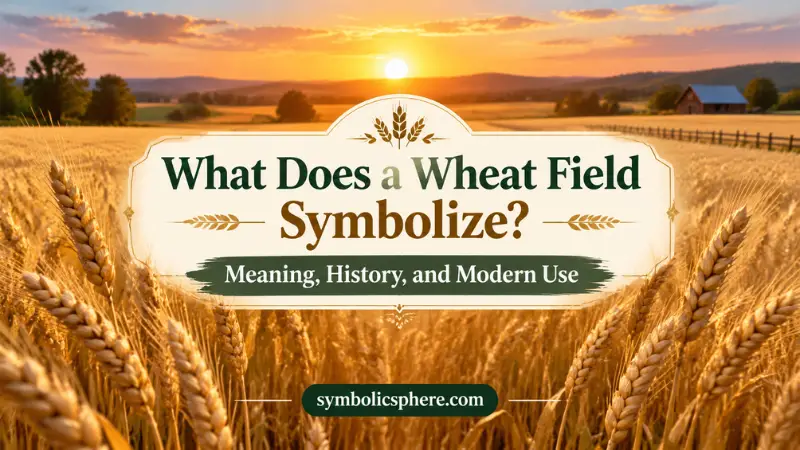
Wheat Field Symbolize: it’s one of the most recognizable images in American visual culture — golden stalks swaying under an open sky, stretching to the horizon across states like Kansas, Nebraska, and the Dakotas, where the crop remains a defining feature of the agricultural landscape. Wheat field symbolism reaches well beyond agriculture, touching on abundance, patience, cycles of growth, and the quiet dignity of labor. You’ll spot this symbolism in paintings, photography, tattoos, and even the language used at weddings and funerals.
Wheat sits at an unusual crossroads: it’s a working crop tied to real economic life, yet it has also absorbed centuries of religious and literary meaning. Understanding why a wheat field feels emotionally significant means separating the practical history of grain farming from the layers of meaning people have layered onto it over time.
In American culture specifically, wheat fields are tied to national identity — the “amber waves of grain” line is baked into patriotic songs and Midwestern self-conception. At the same time, wheat carries older, imported meanings from European and biblical tradition that Americans inherited and reshaped into something distinctly their own.
Wheat Field Symbolize: it’s one of the most recognizable images in American visual culture — golden stalks swaying under an open sky, stretching to the horizon across states like Kansas, Nebraska, and the Dakotas, where the crop remains a defining feature of the agricultural landscape. Wheat field symbolism reaches well beyond agriculture, touching on abundance, patience, cycles of growth, and the quiet dignity of labor. You’ll spot this symbolism in paintings, photography, tattoos, and even the language used at weddings and funerals.
Wheat sits at an unusual crossroads: it’s a working crop tied to real economic life, yet it has also absorbed centuries of religious and literary meaning. Understanding why a wheat field feels emotionally significant means separating the practical history of grain farming from the layers of meaning people have layered onto it over time.
In American culture specifically, wheat fields are tied to national identity — the “amber waves of grain” line is baked into patriotic songs and Midwestern self-conception. At the same time, wheat carries older, imported meanings from European and biblical tradition that Americans inherited and reshaped into something distinctly their own.
Quick Answer: What Does a Wheat Field Symbolize?
Wheat field symbolism represents abundance, hard work, and the reward of patience in modern American culture, especially in harvest imagery, rural identity, and wedding or memorial themes. Historically, wheat has also stood for fertility, life cycles, and divine provision in agricultural and religious traditions dating back thousands of years.
TL;DR
- Wheat fields symbolize abundance, labor, and reward for patience
- Ancient agricultural societies linked wheat to fertility and survival
- American culture ties wheat fields to heartland identity and self-reliance
- Religious traditions use wheat to represent life, death, and renewal
- Modern use spans tattoos, wedding décor, and rustic home design
- Harvest imagery has occasionally been distorted for nationalist propaganda
What a Wheat Field Actually Looks Like
Before the symbolism, there’s the physical reality: rows of slender stalks topped with seed heads, shifting from green to deep gold as they ripen in late spring or summer depending on the region. People encounter this image while driving through the rural Midwest, in stock photography for bread and cereal brands, in classic American paintings, and in family farm photos passed down through generations. Wind moving across a flat gold expanse is distinctive enough to function as visual shorthand even for people who’ve never set foot on a farm.
The Core Meaning Behind Wheat Symbolism
At its simplest, wheat represents sustenance. It’s one of the oldest cultivated grains, and for most of human history, a good harvest meant survival while a failed one meant hardship. That direct link between wheat and life is why the grain became attached to broader ideas of abundance, provision, and reward for effort. A “bountiful harvest” isn’t just a farming term — it’s used metaphorically for any situation where sustained work finally pays off.
Wheat also carries a quieter meaning tied to patience and timing. Unlike fast-growing crops, wheat requires a full season of waiting between planting and harvest, which is why it’s become a common metaphor for delayed gratification and trust in a process.
Ancient Origins: How Wheat First Became Sacred
Wheat domestication began roughly 10,000 years ago in the Fertile Crescent, and its cultivation is considered one of the foundational developments of settled human civilization. Communities that depended on wheat for survival built rituals and deities around its growth cycle. Because a harvest could mean the difference between a community thriving or starving, ancient people treated the crop as something closer to sacred than merely practical — a belief that laid the groundwork for nearly every symbolic use of wheat that followed, from fertility rites to harvest festivals.
Wheat in Ancient Mediterranean and Religious Traditions
In ancient Greek religion, wheat and grain were closely tied to Demeter, the goddess of the harvest. The myth of her daughter’s descent into the underworld and eventual return was used to explain the seasonal cycle of crops dying back in winter and returning in spring — linking wheat directly to loss, renewal, and the passage of time.
In Christian tradition, wheat repeatedly symbolizes physical and spiritual nourishment, most notably through its connection to bread. It also appears in parables about growth and patience, and in the separation of useful crop from waste — reinforcing themes of judgment and reward earned over time.
Why Americans Associate Wheat Fields with the Heartland
In the U.S., wheat fields function less as a religious symbol and more as a marker of national and regional identity. Endless golden fields shape how many Americans picture the country’s agricultural heartland, appearing in patriotic songs, state imagery, and tourism branding for wheat-producing states.
This symbolism carries emotional weight tied to self-reliance, physical labor, and a nostalgic version of rural American life. It shows up in political rhetoric about “the heartland,” at agricultural fairs, and in branding for products marketed as wholesome or traditionally American, such as bread, cereal, and baked goods. Wheat fields also carry a quieter symbolism around simplicity and groundedness — an implicit contrast to urban complexity, often used in advertising to suggest authenticity.
Wheat Fields in American Holidays and Seasonal Décor
Harvest-time imagery, including wheat sheaves, is common in American fall décor, particularly around Thanksgiving. The wheat sheaf — a bundled stalk arrangement — has become a recognizable autumn design element in wreaths, centerpieces, and seasonal branding, symbolizing gratitude for a completed harvest cycle and marking the seasonal shift from summer labor to autumn celebration.
How Other Cultures Interpret Wheat Symbolism
Many cultures outside the U.S. have developed their own wheat symbolism. In parts of Eastern Europe, wheat sheaves are tied to specific harvest festivals and folk customs marking the end of the agricultural year. In Jewish tradition, wheat is one of the seven species associated with the land of Israel and appears in festival observances tied to the harvest calendar. In various European folk traditions, the “last sheaf” of a harvest was sometimes given special ritual treatment, reflecting a belief that it held the concentrated life force of the crop.
The main difference from the American interpretation is specificity: many cultures tie wheat to a particular ritual calendar, while U.S. symbolism treats it more broadly as a general marker of abundance and heartland identity.
What Wheat Imagery Communicates Emotionally
Wheat fields tend to evoke a specific emotional register: calm, groundedness, and quiet satisfaction rather than excitement or urgency. Psychologically, the image taps into the sense of earned reward — that something valuable came from sustained, unglamorous effort rather than luck.
For many people, wheat imagery also carries a nostalgic pull toward simpler, slower living, even among those with no direct connection to farming. That’s part of why wheat field photography and artwork are popular as calming visual content, distinct from more dramatic natural imagery like mountains or oceans.
Wheat Symbolism in Weddings
Wheat’s long-standing association with fertility and abundance carries directly into wedding symbolism. Stalks or sheaves are sometimes woven into bouquets, table settings, or invitations to wish a couple prosperity and a fruitful future together — a personal repurposing of wheat’s oldest symbolic role linking a good harvest to continued life.
Wheat in Mourning and Memorial Symbolism
Because wheat is harvested at the end of its life cycle to sustain others, it has also taken on symbolism tied to mortality and legacy. In memorial art and some funeral traditions, a wheat sheaf represents a life fully lived, much like grain that reached full maturity before harvest — a gentler death symbol than many alternatives, emphasizing completion over loss.
What a Wheat Tattoo Means
Wheat tattoos are a meaningful but understated choice for people wanting to represent hard work, resilience, or a connection to rural or agricultural heritage. A single wheat stalk often represents a family farming background, while a full sheaf can symbolize accumulated effort or a milestone achievement. Compared to more common tattoo symbols, wheat carries a lower-key, personal meaning — rarely chosen for aesthetics alone, and more often tied to a specific family story.
Wheat in Home Décor
In interior design, dried wheat stalks and wheat-patterned textiles are tied to the rustic or farmhouse aesthetic that’s grown popular across American home décor. This use leans on wheat’s association with warmth, simplicity, and natural abundance, often paired with other harvest-season elements like pumpkins or dried florals.
Wheat Fields in Film, Photography, and Social Media
Wheat fields appear frequently in film and photography as visual shorthand for the American Midwest, often used to establish open space, isolation, or a return to one’s roots. On social media, golden-hour wheat field photography circulates as calming, aesthetic content — typically tagged around simplicity or slow living rather than explicit symbolism.
Has Wheat Symbolism Ever Been Misused?
Wheat imagery has occasionally been co-opted in ways that distort its original meaning. Nationalist and propaganda movements in the 20th century used idealized harvest and wheat field imagery to promote agrarian purity myths, linking land and grain to exclusionary ideas about national or ethnic identity — a significant departure from wheat’s older, more universal symbolism of sustenance and shared survival.
It’s worth separating that historical misuse from wheat’s everyday modern meaning in the U.S., where it’s used overwhelmingly in a neutral or positive sense tied to agriculture, nostalgia, and abundance rather than any political ideology.
From Sacred Survival to Modern Nostalgia: How the Symbolism Shifted
Wheat’s symbolic meaning has moved from literal survival in ancient agricultural societies to a more abstract, emotional shorthand today. Early cultures treated wheat almost as a sacred life force tied directly to whether a community would eat that winter. Modern audiences, most of whom are several steps removed from agriculture, relate to wheat more through nostalgia, aesthetics, and inherited cultural association — which is why wheat symbolism today feels calmer and more decorative than the high-stakes fertility and survival rituals of the societies that first gave it meaning.
Wheat field symbolism represents abundance, hard work, and the reward of patience in modern American culture, especially in harvest imagery, rural identity, and wedding or memorial themes. Historically, wheat has also stood for fertility, life cycles, and divine provision in agricultural and religious traditions dating back thousands of years.
TL;DR
- Wheat fields symbolize abundance, labor, and reward for patience
- Ancient agricultural societies linked wheat to fertility and survival
- American culture ties wheat fields to heartland identity and self-reliance
- Religious traditions use wheat to represent life, death, and renewal
- Modern use spans tattoos, wedding décor, and rustic home design
- Harvest imagery has occasionally been distorted for nationalist propaganda
What a Wheat Field Actually Looks Like
Before the symbolism, there’s the physical reality: rows of slender stalks topped with seed heads, shifting from green to deep gold as they ripen in late spring or summer depending on the region. People encounter this image while driving through the rural Midwest, in stock photography for bread and cereal brands, in classic American paintings, and in family farm photos passed down through generations. Wind moving across a flat gold expanse is distinctive enough to function as visual shorthand even for people who’ve never set foot on a farm.
The Core Meaning Behind Wheat Symbolism
At its simplest, wheat represents sustenance. It’s one of the oldest cultivated grains, and for most of human history, a good harvest meant survival while a failed one meant hardship. That direct link between wheat and life is why the grain became attached to broader ideas of abundance, provision, and reward for effort. A “bountiful harvest” isn’t just a farming term — it’s used metaphorically for any situation where sustained work finally pays off.
Wheat also carries a quieter meaning tied to patience and timing. Unlike fast-growing crops, wheat requires a full season of waiting between planting and harvest, which is why it’s become a common metaphor for delayed gratification and trust in a process.
Ancient Origins: How Wheat First Became Sacred
Wheat domestication began roughly 10,000 years ago in the Fertile Crescent, and its cultivation is considered one of the foundational developments of settled human civilization. Communities that depended on wheat for survival built rituals and deities around its growth cycle. Because a harvest could mean the difference between a community thriving or starving, ancient people treated the crop as something closer to sacred than merely practical — a belief that laid the groundwork for nearly every symbolic use of wheat that followed, from fertility rites to harvest festivals.
Wheat in Ancient Mediterranean and Religious Traditions
In ancient Greek religion, wheat and grain were closely tied to Demeter, the goddess of the harvest. The myth of her daughter’s descent into the underworld and eventual return was used to explain the seasonal cycle of crops dying back in winter and returning in spring — linking wheat directly to loss, renewal, and the passage of time.
In Christian tradition, wheat repeatedly symbolizes physical and spiritual nourishment, most notably through its connection to bread. It also appears in parables about growth and patience, and in the separation of useful crop from waste — reinforcing themes of judgment and reward earned over time.
Why Americans Associate Wheat Fields with the Heartland
In the U.S., wheat fields function less as a religious symbol and more as a marker of national and regional identity. Endless golden fields shape how many Americans picture the country’s agricultural heartland, appearing in patriotic songs, state imagery, and tourism branding for wheat-producing states.
This symbolism carries emotional weight tied to self-reliance, physical labor, and a nostalgic version of rural American life. It shows up in political rhetoric about “the heartland,” at agricultural fairs, and in branding for products marketed as wholesome or traditionally American, such as bread, cereal, and baked goods. Wheat fields also carry a quieter symbolism around simplicity and groundedness — an implicit contrast to urban complexity, often used in advertising to suggest authenticity.
Wheat Fields in American Holidays and Seasonal Décor
Harvest-time imagery, including wheat sheaves, is common in American fall décor, particularly around Thanksgiving. The wheat sheaf — a bundled stalk arrangement — has become a recognizable autumn design element in wreaths, centerpieces, and seasonal branding, symbolizing gratitude for a completed harvest cycle and marking the seasonal shift from summer labor to autumn celebration.
How Other Cultures Interpret Wheat Symbolism
Many cultures outside the U.S. have developed their own wheat symbolism. In parts of Eastern Europe, wheat sheaves are tied to specific harvest festivals and folk customs marking the end of the agricultural year. In Jewish tradition, wheat is one of the seven species associated with the land of Israel and appears in festival observances tied to the harvest calendar. In various European folk traditions, the “last sheaf” of a harvest was sometimes given special ritual treatment, reflecting a belief that it held the concentrated life force of the crop.
The main difference from the American interpretation is specificity: many cultures tie wheat to a particular ritual calendar, while U.S. symbolism treats it more broadly as a general marker of abundance and heartland identity.
What Wheat Imagery Communicates Emotionally
Wheat fields tend to evoke a specific emotional register: calm, groundedness, and quiet satisfaction rather than excitement or urgency. Psychologically, the image taps into the sense of earned reward — that something valuable came from sustained, unglamorous effort rather than luck.
For many people, wheat imagery also carries a nostalgic pull toward simpler, slower living, even among those with no direct connection to farming. That’s part of why wheat field photography and artwork are popular as calming visual content, distinct from more dramatic natural imagery like mountains or oceans.
Wheat Symbolism in Weddings
Wheat’s long-standing association with fertility and abundance carries directly into wedding symbolism. Stalks or sheaves are sometimes woven into bouquets, table settings, or invitations to wish a couple prosperity and a fruitful future together — a personal repurposing of wheat’s oldest symbolic role linking a good harvest to continued life.
Wheat in Mourning and Memorial Symbolism
Because wheat is harvested at the end of its life cycle to sustain others, it has also taken on symbolism tied to mortality and legacy. In memorial art and some funeral traditions, a wheat sheaf represents a life fully lived, much like grain that reached full maturity before harvest — a gentler death symbol than many alternatives, emphasizing completion over loss.
What a Wheat Tattoo Means
Wheat tattoos are a meaningful but understated choice for people wanting to represent hard work, resilience, or a connection to rural or agricultural heritage. A single wheat stalk often represents a family farming background, while a full sheaf can symbolize accumulated effort or a milestone achievement. Compared to more common tattoo symbols, wheat carries a lower-key, personal meaning — rarely chosen for aesthetics alone, and more often tied to a specific family story.
Wheat in Home Décor
In interior design, dried wheat stalks and wheat-patterned textiles are tied to the rustic or farmhouse aesthetic that’s grown popular across American home décor. This use leans on wheat’s association with warmth, simplicity, and natural abundance, often paired with other harvest-season elements like pumpkins or dried florals.
Wheat Fields in Film, Photography, and Social Media
Wheat fields appear frequently in film and photography as visual shorthand for the American Midwest, often used to establish open space, isolation, or a return to one’s roots. On social media, golden-hour wheat field photography circulates as calming, aesthetic content — typically tagged around simplicity or slow living rather than explicit symbolism.
Has Wheat Symbolism Ever Been Misused?
Wheat imagery has occasionally been co-opted in ways that distort its original meaning. Nationalist and propaganda movements in the 20th century used idealized harvest and wheat field imagery to promote agrarian purity myths, linking land and grain to exclusionary ideas about national or ethnic identity — a significant departure from wheat’s older, more universal symbolism of sustenance and shared survival.
It’s worth separating that historical misuse from wheat’s everyday modern meaning in the U.S., where it’s used overwhelmingly in a neutral or positive sense tied to agriculture, nostalgia, and abundance rather than any political ideology.
From Sacred Survival to Modern Nostalgia: How the Symbolism Shifted
Wheat’s symbolic meaning has moved from literal survival in ancient agricultural societies to a more abstract, emotional shorthand today. Early cultures treated wheat almost as a sacred life force tied directly to whether a community would eat that winter. Modern audiences, most of whom are several steps removed from agriculture, relate to wheat more through nostalgia, aesthetics, and inherited cultural association — which is why wheat symbolism today feels calmer and more decorative than the high-stakes fertility and survival rituals of the societies that first gave it meaning.
Wheat Field Symbolism at a Glance
| Context | Meaning in the USA | Common Associations | Notes |
|---|---|---|---|
| Rural/heartland identity | Self-reliance, hard work | Midwest farming, patriotism | Central to how wheat is used in American branding |
| Weddings | Fertility, shared future prosperity | Bouquets, table décor | Draws on ancient fertility symbolism |
| Memorial/mourning | Life fully lived, completion | Sheaf motifs, memorial art | Gentler alternative to typical death imagery |
| Tattoos | Resilience, family heritage | Single stalk or sheaf designs | Personal rather than decorative meaning |
| Home décor | Warmth, rustic simplicity | Farmhouse style, fall displays | Popular in autumn seasonal design |
| Historical misuse | Distorted agrarian nationalism | 20th-century propaganda | Contrasts with wheat’s neutral everyday use today |
FAQs
What does a wheat field symbolize spiritually?
In religious traditions, wheat often symbolizes provision, spiritual nourishment, and cycles of growth and renewal. It’s frequently used in parables and rituals to represent patience and the eventual reward of faith or effort.
What does a wheat tattoo mean?
A wheat tattoo typically represents hard work, resilience, or a personal connection to farming or rural heritage, often chosen to honor family history rather than for purely decorative reasons.
Is wheat a symbol of good luck?
Wheat is more closely tied to abundance and fertility than luck specifically, though its association with a successful harvest has led some traditions to treat it as a sign of coming prosperity.
Why is wheat used in wedding décor?
Wheat’s long history as a fertility and abundance symbol makes it a natural wedding choice, used to represent hope for a prosperous, fruitful life together.
What’s the difference between historical and modern wheat symbolism?
Historically, wheat symbolized literal survival and was tied to sacred agricultural rituals. Today it carries a softer, more nostalgic meaning centered on heritage, calm, and aesthetic appreciation rather than dependence.
Why do wheat fields appear so often in American imagery?
Wheat fields are visually tied to the Midwest and heartland identity, making them a recognizable stand-in for rural American life, self-reliance, and agricultural tradition in patriotic and cultural imagery.
Has wheat symbolism ever been misused?
Yes — some 20th-century nationalist movements used idealized wheat field imagery to promote exclusionary ideas about land and identity, which stands apart from wheat’s broader, more universal meaning of shared sustenance.
Conclusion
Wheat field symbolism endures because it sits at the intersection of something deeply practical and something quietly emotional. At its core, it represents abundance and the reward that comes from sustained effort — a meaning rooted in thousands of years of agricultural dependence and reshaped, in the American context, into a symbol of heartland identity and rural memory.
What sets this symbolism apart from purely decorative imagery is its honesty: a wheat field doesn’t promise instant reward. It represents a full season of waiting, tending, and trusting a process before anything is gained — a meaning worth holding onto, whether it’s stitched into a wedding table runner or tattooed on someone’s arm.