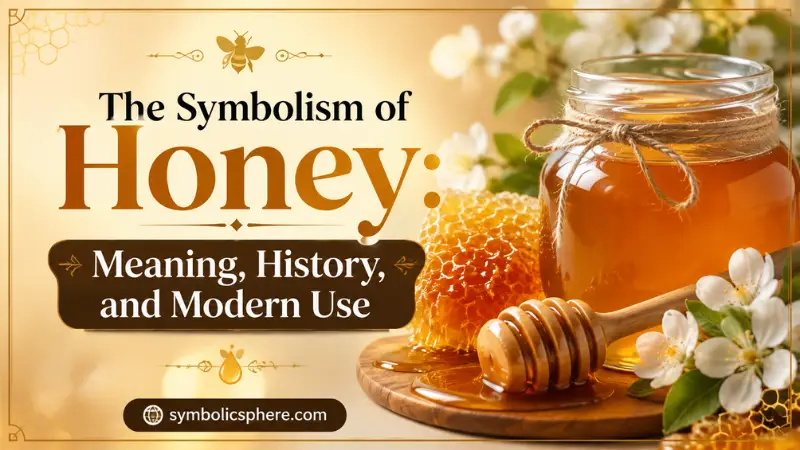
Honey shows up in more places than most people realize once they start looking for it. It’s in wedding toasts, religious texts, tattoo shops, skincare aisles, and the pet names couples use for each other. Long before it was a pantry staple, honey carried meaning tied to sweetness, effort, and reward. The symbolism of honey has stayed remarkably consistent across centuries, even as the contexts around it have changed.
Part of the reason honey holds such steady meaning is that it comes from an unusual process: bees transform something ordinary — flower nectar — into something rich, preserved, and useful to humans without much alteration. That transformation, paired with the labor bees put into making it, gives honey a symbolic weight that goes beyond its taste. People don’t just associate honey with flavor; they associate it with earned sweetness, care, and something good that took real work to produce.
This matters in modern American culture because honey keeps appearing at emotionally significant moments — weddings, new beginnings, comfort during hard times — even for people who never think much about bees or beekeeping. Understanding why helps explain some of the language, rituals, and design choices that might otherwise seem random.
Quick Answer
Honey commonly symbolizes sweetness, love, and earned reward in modern American culture, especially in weddings, romantic language, and self-care branding. Historically, it has also represented abundance, divine favor, healing, and hard-won prosperity in ancient and religious traditions.
Key Takeaways
- Honey represents sweetness that required labor, not luck.
- Ancient cultures linked honey to gods, healing, and the afterlife.
- American weddings use honey to symbolize a sweet, unified future.
- Religious texts often pair honey with milk to signify blessing.
- Tattoos and jewelry use honey and bee imagery for resilience and hard work.
- Wellness branding leans on honey to suggest purity and gentleness.
What Honey Looks Like and Where People Encounter It
Honey is a thick, amber liquid produced by bees from flower nectar, though its color and thickness vary by region and flower source, ranging from nearly clear to deep, almost black tones. Most Americans encounter honey first in the kitchen — drizzled on biscuits, stirred into tea, or used as a natural sweetener. From there, its imagery spreads into unexpected places: honeycomb patterns on tile and wallpaper, bee charms on bracelets, and the golden-glass jar that’s become a visual shorthand for “natural” or “handmade” on product packaging.
Beyond the physical object, honey also appears as a word and an image. Calling someone “honey” is common across much of the U.S., and phrases like “honeymoon” or “land of milk and honey” carry symbolic weight even when no actual honey is involved.
Core Meaning: What Honey Represents Today
At its center, honey symbolizes sweetness that was earned rather than given freely. Unlike sugar, which is processed and mass-produced, honey is tied in the public imagination to bees working collectively, flower by flower, to create something valuable. This is why honey often stands in for effort rewarded — a good outcome that came from patience and labor, not luck.
Honey also symbolizes preservation and lasting value. Because honey doesn’t spoil under proper storage, it has become an emblem of something enduring, which is one reason it appears so often in wedding and anniversary contexts. A third common meaning is comfort: honey’s texture and warmth make it a natural symbol for soothing, whether that’s a sore throat remedy or a term of endearment meant to calm or reassure someone.
Ancient Roots and Early Symbolism
Honey’s symbolic history stretches back further than written language. Cave paintings in Spain dating back thousands of years depict humans harvesting honey from wild hives, suggesting it was valued long before agriculture or organized religion gave it formal meaning. In ancient Egypt, honey was used in offerings to deities and in embalming practices, linking it early on to preservation, both physical and spiritual.
In ancient Greece, honey was associated with eloquence and wisdom; poets and orators were sometimes described as having “honeyed” words, a phrase that survives in English today. The Greeks also connected honey to the gods, believing it was food fit for divine beings and used in funeral rites to ease the passage to the afterlife. These early associations — divinity, preservation, and persuasive sweetness — set the foundation for almost everything honey has come to represent since.
Symbolism in Religious Traditions
Honey holds a prominent place in several religious texts, most notably in the Hebrew Bible’s repeated description of the Promised Land as one “flowing with milk and honey,” a phrase used to signal abundance and divine blessing. In Judaism, honey is central to Rosh Hashanah, when apples dipped in honey are eaten to symbolize hope for a sweet new year.
In Islamic tradition, honey is mentioned in the Quran as a source of healing, and an entire chapter is named after the bee, reflecting reverence for what bees produce. Hindu traditions include honey as one of five sacred substances used in certain rituals, symbolizing purity and sweetness offered to the divine. Across these traditions, honey rarely stands for indulgence alone; it consistently represents something given by or connected to a higher order.
What Honey Commonly Means in the United States
In the U.S., honey’s symbolism has shifted toward personal relationships and self-improvement rather than strictly religious or civic meaning. It’s most visible in three areas: romance, comfort, and wellness. American culture frequently uses “honey” as a term of affection, softening it into something warm and nonthreatening compared to more intense terms of endearment.
Honey also plays a role in American ideas about self-reliance and natural living. Local honey, in particular, has taken on meaning tied to community and authenticity, with farmers markets and small producers using it to represent a connection to place that mass-produced sweeteners lack. This ties into a broader American instinct to associate “natural” and “local” with trustworthiness and care.
| Context | Meaning in the USA | Common Associations | Notes |
|---|---|---|---|
| Weddings | Unity and a sweet shared future | Honey ceremonies, mead toasts | Rooted in the word “honeymoon” |
| Religious practice | Blessing and hope | Rosh Hashanah, biblical abundance | Varies by faith tradition |
| Wellness branding | Purity and gentleness | Skincare, teas, natural remedies | Reflects trust in “natural” labeling |
| Tattoos | Hard work and resilience | Bees, honeycomb patterns | Popular among those tied to labor or family businesses |
| Everyday language | Affection and comfort | “Honey” as a pet name | Common across most U.S. regions |
Honey and the American Wedding
Few modern uses of honey are as visible as its role in weddings. The word “honeymoon” itself is believed to reference an old European custom of newlyweds drinking honey wine, or mead, during the first month of marriage to encourage sweetness and fertility in the union. American couples have revived and adapted versions of this idea, sometimes including honey ceremonies where partners exchange a taste of honey to represent the sweetness they hope to build together.
This use fits a broader American pattern of borrowing older customs and repurposing them as personal, symbolic gestures rather than strict religious or cultural obligations. The honey ceremony isn’t tied to a specific faith; it works because the symbolism — sweetness, effort, and partnership — translates easily regardless of background.
Cross-Cultural Meaning Beyond the U.S.
Outside the U.S., honey carries some overlapping but distinct meanings. In traditional Chinese medicine, honey is valued for its soothing properties and is often used in remedies for coughs and digestive issues, tying its symbolism closely to healing rather than romance. In parts of Africa, honey has long been connected to fertility rituals and rites of passage, reflecting its association with life-giving sweetness.
In Slavic folklore, honey appears in stories involving hospitality, where offering honey to a guest signals warmth and generosity. These variations show that while the emotional core of honey’s symbolism — something good, earned, and worth sharing — stays fairly stable, the specific rituals built around it depend heavily on local tradition.
Emotional and Psychological Meaning
Psychologically, honey taps into associations formed early in life: sweetness paired with comfort, often from childhood foods or remedies given during illness. This is likely why honey-related language feels soothing rather than intense. Calling someone “honey” suggests warmth without the heightened emotional charge of a word like “love” or “darling.”
Honey also symbolizes patience and delayed reward. Because it takes bees time and repeated effort to produce, people intuitively read honey as representing outcomes that come from sustained effort rather than quick wins. This is part of why “sweet” success — a promotion earned after years of work, for example — sometimes gets described in honey-adjacent language, even informally.
Why Honey Appears in Tattoos and Personal Style
Bee and honeycomb tattoos have grown steadily more common, often chosen by people with family ties to farming, beekeeping, or the American South and Midwest, where beekeeping traditions run deep. For these individuals, the imagery isn’t abstract; it’s a direct reference to family labor and inherited skill. For others, a bee or honeycomb tattoo represents a more general idea of community effort, since bees are widely known for functioning as a highly organized, cooperative colony.
Honeycomb’s geometric pattern has also become popular in jewelry and home decor for reasons that are more aesthetic than symbolic, though the underlying association with hard-earned sweetness often still lingers in how people describe why they chose it.
Honey in Wellness and Beauty Culture
Skincare and wellness brands lean heavily on honey imagery to suggest gentleness, purity, and a break from synthetic ingredients. Manuka honey, in particular, has built a reputation in the U.S. wellness market as a premium natural remedy, associated with healing and quality control rather than casual sweetness. This branding choice draws directly on honey’s older symbolic ties to purity and preservation, repackaged for a modern audience focused on ingredient transparency.
This wellness association has also reinforced honey’s link to self-care more broadly. A warm drink with honey isn’t just a remedy; for many people, it represents slowing down and treating themselves gently, especially during illness or stress.
Controversies and Misuse of Honey Symbolism
Honey’s positive symbolism has occasionally been stretched into misleading marketing claims, particularly around unverified health benefits. Some products labeled “raw” or “pure” honey have been found to be diluted with cheaper syrups, which has led to real consumer trust issues separate from honey’s symbolic meaning. This is a practical problem rather than a cultural one, but it does complicate the “natural equals trustworthy” association many people bring to honey.
There’s also a smaller pattern of honey imagery being used in overly sentimental or exaggerated marketing language that oversells its meaning, turning a grounded symbol of earned sweetness into vague, feel-good branding with little substance behind it. Separating honey’s genuine historical and emotional meaning from this kind of overuse is worth doing, since the two are often blended together in casual conversation.
How Honey’s Symbolism Has Evolved Over Time
Honey’s meaning has moved from primarily sacred and medicinal in ancient societies to primarily personal and emotional in modern American life. Where ancient cultures saw honey as a gift connected to gods or the afterlife, contemporary use treats it more as a symbol of intimate relationships, self-care, and small-scale authenticity, like supporting a local beekeeper instead of buying a mass-produced sweetener.
What hasn’t changed is the underlying idea that honey represents something good that took effort to create. Whether that effort belonged to bees, to ancient priests preparing offerings, or to a modern beekeeper tending hives in their backyard, honey has always stood for reward that follows work, not shortcuts.
Honey in American Holidays and Traditions
Beyond weddings, honey shows up in a handful of recurring American traditions. Fall harvest festivals often feature local honey vendors, tying the product to seasonal abundance. Jewish American households mark Rosh Hashanah with apples and honey, a tradition that has become familiar even to many non-Jewish Americans through shared community events and school programs. Some families also use honey informally in New Year’s traditions, following the same logic of inviting sweetness into the year ahead, even without a specific religious basis for doing so.
FAQs
What does honey symbolize spiritually?
Honey is often seen as a symbol of divine blessing and abundance, especially in religious texts that describe favored places or times as full of “milk and honey.” It also represents purity in several faith traditions, since it’s produced without significant human alteration.
What does a honey or bee tattoo mean?
A bee or honeycomb tattoo typically represents hard work, community effort, and resilience, drawing on the bee’s reputation as a tireless, cooperative worker. For some, it also honors family ties to farming or beekeeping traditions.
Why is honey associated with weddings?
Honey’s link to weddings comes largely from the tradition behind the word “honeymoon,” when couples drank honey-based mead to encourage a sweet start to marriage. Modern couples sometimes revive this with honey-tasting ceremonies during the wedding itself.
Is honey a positive or negative symbol?
Honey is almost universally viewed as a positive symbol, representing sweetness, reward, and comfort. Any negative associations tend to come from misleading marketing around honey products rather than the symbolism of honey itself.
Does honey mean the same thing in every culture?
The core idea of honey as something good and earned stays consistent, but specific rituals vary widely, from Jewish New Year traditions to African fertility rites and Slavic hospitality customs. Regional beliefs shape how that core meaning gets expressed.
Why do people call loved ones “honey”?
The term likely persists because honey is associated with warmth and comfort without the intensity of stronger romantic language. It offers an easy, gentle way to express affection in everyday conversation.
What’s the difference between honey’s historical and modern symbolism?
Historically, honey was tied to religious offerings, healing, and the afterlife, while its modern symbolism leans more toward personal relationships, wellness, and authenticity. The underlying theme of earned sweetness has carried through both eras.
Conclusion
Honey’s symbolism holds up because it’s rooted in something real: a genuinely unusual substance produced through visible, collective effort. That grounding is why the meaning of honey has traveled so easily from ancient temples to modern wedding ceremonies without losing its core idea.
For most Americans today, honey stands for sweetness that means something because it was earned, whether that’s a marriage built over time, a remedy passed down through a family, or a jar bought straight from a local beekeeper. It’s a small, tangible symbol, but one that continues to carry weight precisely because its meaning has never needed much exaggeration to feel true.