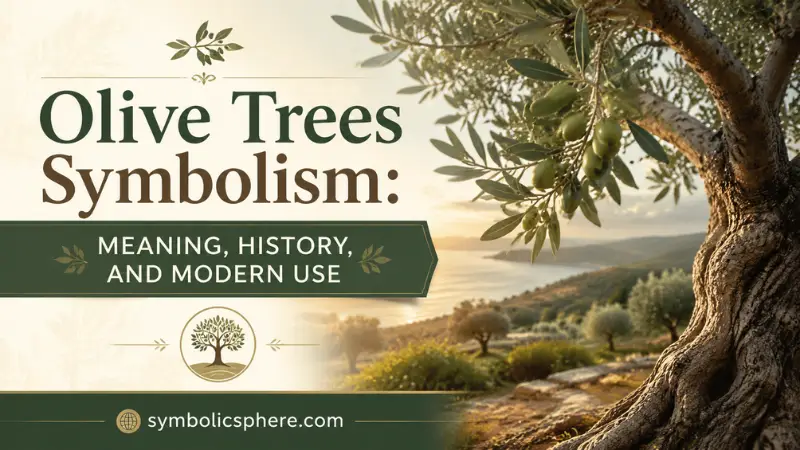
Olive trees symbolism shows up in more places than most people realize — on wedding invitations, in political cartoons, on tattoos, and in the design of the United Nations flag. The tree itself is unassuming: gnarled, silver-green, and slow-growing, often living for centuries in rocky Mediterranean soil. But what it represents has grown far beyond its botanical roots.
People search for the meaning of olive trees because the symbol keeps appearing in contexts that feel important — peace agreements, memorial gardens, family crests, and religious ceremonies. It’s a symbol that carries weight without being loud about it, which is part of why it has lasted so long.
This article explains where the tree’s meaning came from, how it changed over time, and how it’s actually used and understood in the United States today.
Quick Answer
Olive trees commonly symbolize peace and reconciliation in modern American culture, most visibly through the “extending an olive branch” phrase used in politics, business, and personal relationships. Historically, the tree was also linked to victory, wisdom, abundance, and divine favor in ancient Mediterranean and biblical traditions.
TL;DR
- Olive branches represent peace, most famously through “extending an olive branch.”
- Ancient Greece linked the tree to wisdom, victory, and the goddess Athena.
- Biblical stories tie the olive branch to renewal after hardship.
- Americans use the symbol in weddings, memorials, political imagery, and tattoos.
- The olive tree also represents resilience because of its long lifespan and hardiness.
- Modern misuse sometimes flattens the symbol into a vague peace cliché.
What an Olive Tree Actually Looks Like
Before getting into meaning, it helps to picture the real tree. Olive trees have narrow, silvery-green leaves, thick and twisted trunks, and small white flowers that give way to green or black fruit. They grow slowly and can survive drought, poor soil, and centuries of neglect, which is part of why some trees in Mediterranean groves are documented as being over a thousand years old.
Most Americans encounter the tree indirectly — through olive oil bottles, potted olive trees sold at nurseries and home decor stores, or stylized branch illustrations rather than the living plant itself.
Why the Olive Branch Became a Symbol of Peace
The phrase “extending an olive branch” is so common in American English that many people use it without thinking about its origin. The association with peace traces back to ancient Greece, where olive branches were used in olive wreaths given to victors, and later spread through Roman and biblical tradition as a gesture of goodwill and truce.
By the time the phrase entered everyday English, it had shed most of its specific historical baggage and become shorthand for one simple idea: I want to make peace, not conflict.
Ancient Roots and Early Symbolism
The olive tree’s symbolic weight predates any single religion or nation. In ancient Greece, the tree was sacred to Athena, goddess of wisdom, and according to myth she won the city of Athens by gifting its people an olive tree, which they valued for food, oil, and light over a rival god’s offering. This connection tied the olive not just to peace but to wisdom, civic pride, and practical prosperity.
Olive oil itself carried enormous economic and ceremonial importance in the ancient Mediterranean world. It was used for cooking, lighting lamps, anointing athletes and rulers, and preserving food, which meant the tree that produced it was tied to survival and status long before it became a peace symbol.
The Biblical Story Behind the Olive Bran
In the biblical flood narrative, a dove returns to Noah’s ark carrying a freshly plucked olive leaf, signaling that floodwaters had receded and land was habitable again. This single image did more than almost anything else to cement the olive branch as a symbol of renewal, hope, and the end of hardship in Western culture.
That story is why the dove-and-olive-branch pairing still appears together so often in American visual culture, from religious art to peace-themed jewelry, even among people unfamiliar with the original text.
Symbolism in the United States
In the U.S., olive tree symbolism is almost entirely filtered through the peace and goodwill association, with wisdom and resilience as secondary meanings. Americans encounter it in a handful of recurring contexts.
Politically, “olive branch” is standard language for a conciliatory gesture, used constantly in news coverage of negotiations, diplomacy, and even office politics. Visually, the olive branch appears on the Great Seal of the United States, held in the eagle’s talon alongside a bundle of arrows — a deliberate pairing meant to represent the nation’s readiness for both peace and war.
In everyday life, olive branch motifs show up in wedding decor and vows, sympathy and memorial arrangements, home decor collections, and minimalist jewelry lines marketed around themes of calm and new beginnings.
Cross-Cultural Meaning Beyond the U.S.
While peace dominates the American reading of the symbol, other cultures emphasize different angles. In Greek culture, the olive remains tied to national identity, hospitality, and Athena’s legacy, with olive wreaths still referenced in modern Greek ceremonial and sporting traditions. In Jewish tradition, the olive is one of the seven biblical species associated with the land of Israel, connected to abundance and blessing. In Islamic tradition, the olive tree is referenced as a blessed tree in religious text, linked to light and nourishment.
Mediterranean cultures more broadly treat the olive tree as a symbol of continuity and rootedness, since a single tree can outlive many human generations while still producing fruit.
Emotional and Psychological Meani
Psychologically, the olive branch communicates a specific kind of vulnerability — the willingness to de-escalate first. Offering one signals that the offerer values the relationship or outcome more than being right, which is why the gesture carries social weight even in casual American speech (“I sent her an olive branch text”).
The tree itself, apart from the branch, tends to signal endurance and quiet strength rather than conflict resolution. Its association with long life and drought resistance makes it a common personal symbol for people who want to represent getting through a hard period without losing themselves.
Modern Usage: Tattoos, Jewelry, and Decor
Olive branch tattoos are popular among people marking recovery, the end of a difficult relationship, or a personal reconciliation, often placed as a small, simple line-art branch on the wrist, ribs, or behind the ear. The appeal is partly aesthetic — the branch shape works well as minimalist line art — and partly symbolic, since it reads as personal peace-making rather than anything religious or political by default.
In jewelry, delicate olive branch necklaces and rings are marketed heavily around weddings, new beginnings, and sympathy gifts. In home decor, potted olive trees and dried olive branch stems have become popular in minimalist and Mediterranean-inspired interior design, valued as much for their sculptural look as for any symbolism.
Olive branch imagery also circulates on social media around conflict resolution, therapy and mental health content, and posts about reconciling with estranged family members.
Olive Trees in Weddings and New Beginnin
Olive branches appear frequently in American wedding symbolism, incorporated into bouquets, centerpieces, and vow language as a way to represent lasting peace and partnership between two families. Because olive trees are long-lived and hardy, some couples specifically choose the symbol to represent a marriage meant to weather hard seasons rather than just celebrate the wedding day itself.
Potted olive trees are also given as wedding or housewarming gifts in some circles, chosen partly because a living tree that grows over decades mirrors the idea of a relationship maturing over time.
Olive Trees in Mourning and Memorial Context
Because of its associations with peace, renewal, and long life, the olive branch also appears in American memorial and sympathy contexts — engraved on markers, included in funeral arrangements, or referenced in eulogies as a symbol of a peaceful passing or a life that provided steady support to others. This use draws more on the tree’s endurance and calm associations than on its political peace symbolism.
Olive Trees in Political and Diplomatic Symbolism
Beyond the Great Seal, the olive branch appears throughout American and international political imagery. The United Nations flag features olive branches framing a world map, chosen specifically to represent global peace efforts. Peace treaties, ceasefire announcements, and diplomatic cartoons regularly use olive branch imagery as visual shorthand, often paired with doves.
This political usage is largely responsible for keeping the symbol alive in everyday American vocabulary, since news coverage repeats the phrase “extending an olive branch” far more often than any religious or historical text does.
Common Misunderstandings About the Symbol
One common misunderstanding is treating the olive branch as an ancient symbol exclusively about passivity or weakness, when historically it represented a specific, deliberate diplomatic gesture rather than surrender. Offering an olive branch in ancient and biblical contexts was an active choice to pursue peace, not an admission of defeat.
Another misconception is assuming olive symbolism is purely religious. While biblical and Quranic references shaped part of its meaning, the Greek civic and mythological associations developed independently and predate those texts in some respects.
Some modern marketing also flattens the symbol into a generic “good vibes” motif, stripping out the specific idea of reconciliation after conflict and replacing it with vague calm or luxury branding, which dilutes the meaning without acknowledging the shift.
Controversies and Misuse
The clearest controversy around olive tree symbolism isn’t about the symbol’s traditional meaning but about its use in real-world land and political conflicts, particularly in the Middle East, where olive groves have become flashpoints tied to land ownership, agriculture, and identity. In that context, olive trees carry meanings around heritage and survival that go well beyond the peaceful branch symbolism familiar to most Americans, and destruction of groves has been used and reported on as a politically charged act.
It’s worth separating this real-world, high-stakes symbolism from the more casual, decorative use of olive branches in American weddings or home decor, since conflating the two can come across as tone-deaf. Being aware that the same tree carries very different emotional weight in different regions is part of using the symbol respectfully.
Evolution of Meaning Over Time
The olive tree’s symbolism didn’t arrive fully formed. It built up in layers: first as a practical resource tied to survival and trade, then as a marker of civic and divine favor in Greek mythology, then as a renewal symbol through biblical narrative, and finally as diplomatic and political shorthand in the modern era.
What’s changed most in recent decades is scale and casualness. A gesture once reserved for treaties and religious storytelling now shows up in text messages and tattoo shops, stripped of formality but keeping its core meaning of offering peace after tension.
Olive Tree Symbolism at a Glance
| Context | Meaning in the USA | Common Associations | Notes |
|---|---|---|---|
| Politics and diplomacy | Peace gesture, willingness to negotiate | Great Seal, UN flag, treaties | Often paired with doves |
| Weddings | Lasting partnership, resilience | Bouquets, vows, potted gifts | Ties to the tree’s long lifespan |
| Tattoos and jewelry | Personal peace-making, new beginnings | Minimalist branch line art | Popular for recovery or reconciliation |
| Memorials | Calm, endurance, peaceful legacy | Markers, eulogies, arrangements | Draws on longevity more than politics |
| Home decor | Mediterranean style, calm aesthetic | Potted trees, dried branches | Largely decorative, light symbolism |
| International conflict zones | Heritage, land, survival | Groves tied to identity | Distinct from casual U.S. usage |
FAQs
What does an olive branch tattoo mean?
An olive branch tattoo typically represents personal peace, reconciliation, or moving past a difficult chapter, often chosen after recovery, a breakup, or a family reconciliation. It’s rarely tied to religion by default unless the wearer specifies that meaning.
Why is the olive branch a symbol of peace?
The association comes from ancient Greek tradition and the biblical flood story, where a dove returned with an olive leaf to signal the end of the flood and the start of renewal. Over time this merged with Greek olive wreath traditions to form the peace symbolism used today.
What does the olive branch on the U.S. Great Seal mean?
On the Great Seal, the eagle holds an olive branch in one talon and a bundle of arrows in the other, representing the nation’s dual readiness for peace and war. The eagle’s head faces the olive branch, symbolizing a preference for peace.
Is olive tree symbolism religious or secular?
It’s both, depending on context. Biblical and Quranic references give it religious weight, while Greek mythology and modern political usage keep it relevant in entirely secular settings like diplomacy and design.
Do olive trees have any negative symbolism?
The tree itself isn’t traditionally negative, but olive groves have become symbols of contested land and heritage in certain real-world conflicts, giving the plant a heavier, more painful meaning in those specific regional contexts.
Why are olive trees associated with wisdom?
This traces back to Greek mythology, where the olive tree was Athena’s gift to Athens, tying the plant to her domain of wisdom and strategy rather than raw military victory.
What’s the difference between an olive branch and an olive wreath?
A branch typically symbolizes a peace offering or gesture, while a wreath historically symbolized honor and victory, given to winners of athletic and civic competitions in ancient Greece. Both use the same plant but carry distinct symbolic roles.
Conclusion
Olive tree symbolism endures because it does something rare: it compresses a specific, active gesture — choosing peace after conflict — into a single, recognizable image. That meaning didn’t come from nowhere. It was built over centuries through Greek mythology, biblical storytelling, and political tradition, then carried into modern American life through weddings, tattoos, and diplomatic language.
Understanding where the symbol comes from also means understanding where it gets more complicated, particularly in regions where olive groves represent land and survival rather than a metaphor. Holding both of those truths side by side is really what it means to understand olive tree symbolism fully rather than just repeating the phrase.
The next time an olive branch shows up in a headline, a wedding toast, or a small line tattoo, it’s carrying a lot more history than its size would suggest.


